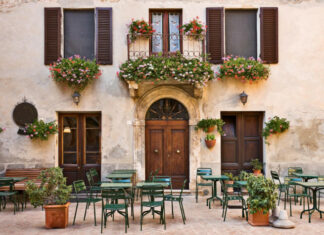
Picture a city perched on a hilltop, so dazzlingly white it seems to glow under the southern Italian sun. This isn’t a dream; it’s Ostuni, Italy, the country’s famed La Città Bianca (The White City). Puglia is a sunny region that forms the “heel of Italy’s boot.” Its old buildings stand above endless olive groves, holding many secrets inside.
Ostuni, Italy: Explore The White City’s Beauty
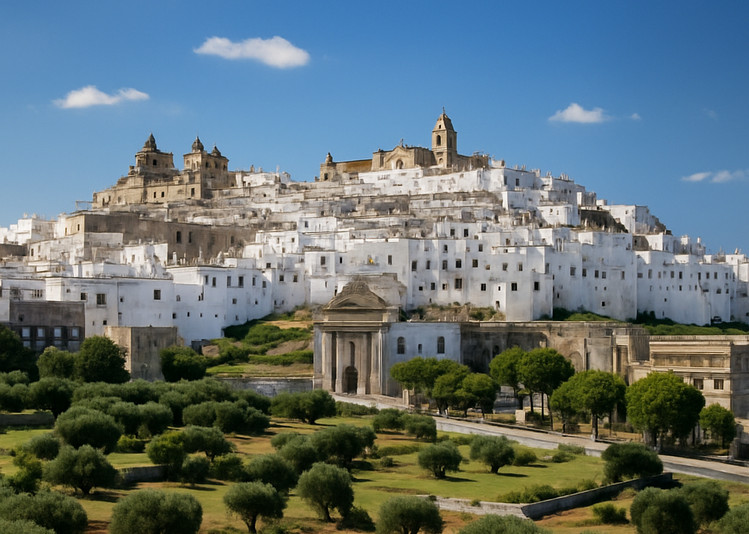
While the brilliant white walls look beautiful, their original purpose was far more practical. The tradition of using lime wash began as a desperate measure of survival. This practice has roots stretching back to the Middle Ages, but it became especially crucial during the 17th-century plague. Townspeople used a lime-based paint because lime has natural antibacterial properties and acts as a disinfectant.
People believed that covering all surfaces, like houses and churches, would help clean the city. They thought this would keep the disease at bay that had affected much of Europe. The bright white also helped reflect sunlight into the narrow, winding alleys. This made them feel brighter and cleaner.
Today, that practice has become a cherished tradition and a matter of civic pride. The local government even mandates that homeowners in the historic center keep their buildings a pristine white. This dedication makes exploring Ostuni a trip through time. Walking through the stone alleys leads to amazing views of the Adriatic Sea.
Your Essential Ostuni To-Do List: 3 Unmissable Experiences
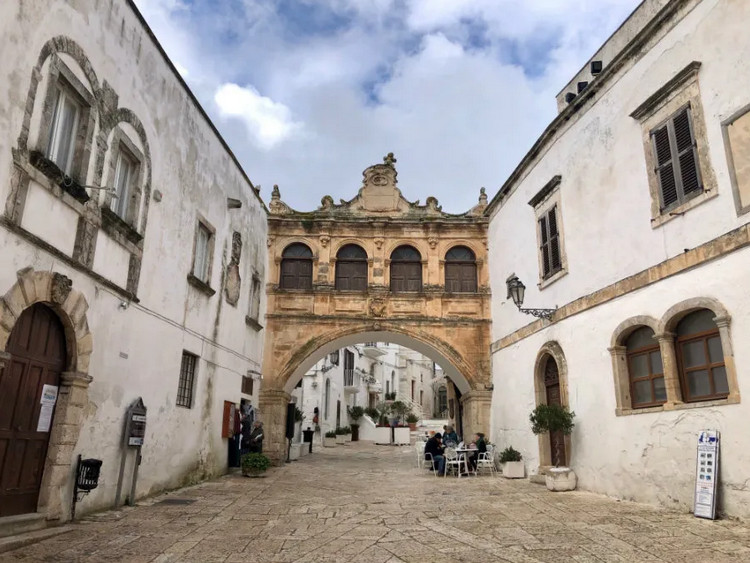
Once inside the ancient city walls, the best thing to do is simply embrace getting lost. The historic center, or centro storico, is a magnificent maze of whitewashed alleys, winding staircases, and charming dead ends.
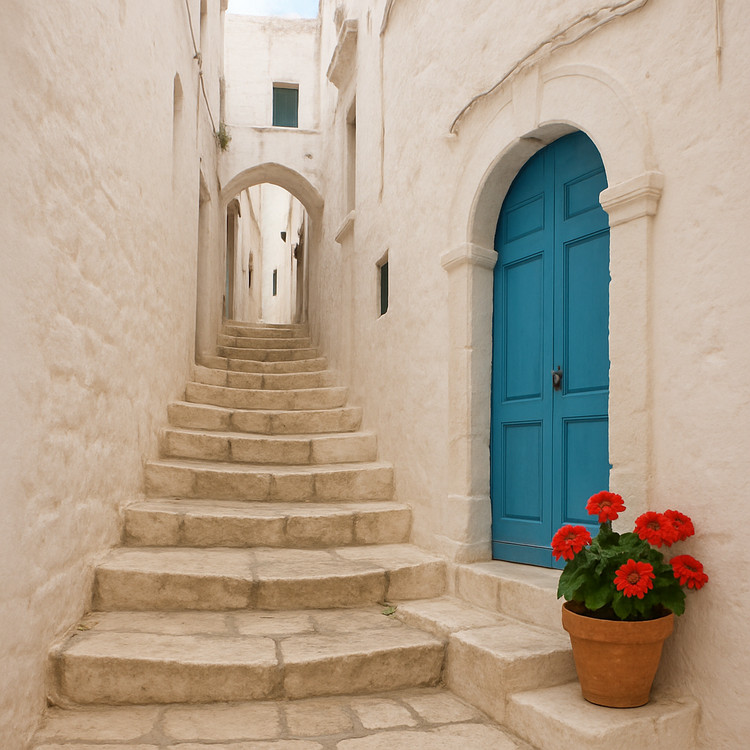
Every turn shows a new photo chance. You might see a bright blue door on a white wall. You could find a cat napping in a sunbeam. Or you might spot a balcony full of bright red geraniums. Don’t worry about a map; the joy here is in the spontaneous discovery.
As you walk, you will reach Via Cattedrale. This is the main street that slopes gently up through the old town. This lively street is lined with artisan shops and cozy cafes, leading you directly to the city’s highest point.
Here, the 15th-century Ostuni Cathedral stands as the grand finale. Check out its unique front, featuring a large, detailed rose window. It looks like it was made from stone lace. This is a beautiful example of late Gothic architecture.
Just past the cathedral, a stone archway opens up to a breathtaking panoramic viewpoint. From this viewpoint, the city’s white rooftops slope down the hill.
They lead to a wide area of old olive groves. These groves stretch for miles until they reach the sparkling blue Adriatic Sea. This is the iconic shot you’ve seen in pictures, and it’s even more stunning in person.
A Food Lover’s Guide to Ostuni: What to Eat and Where to Find It
The one dish you must order in Ostuni is Orecchiette con le cime di rapa. This is the soul of Puglia on a plate. The pasta, whose name means “little ears” for its distinctive shape, is perfectly designed to scoop up the savory sauce.
It is usually served with cime di rapa, a leafy green like broccoli rabe. This green is sautéed with garlic, chili, and anchovies. These ingredients give the dish a rustic and slightly bitter flavor. You will find it on nearly every trattoria’s menu.
The incredible view of endless olive groves isn’t just for scenery; it’s the source of Puglia’s liquid gold. The region’s peppery, vibrant olive oil is the star of the show here.
It’s poured generously over fresh bread, grilled vegetables, and bean soups. This adds a final burst of flavor before serving. Don’t be shy about asking for some extra oil for your bread—it’s a taste experience all on its own.
Ostuni’s cuisine is magical in its simplicity. Local cooking focuses on a few high-quality, seasonal ingredients, a philosophy known as cucina povera, or “peasant cooking.” Menus focus on fresh ingredients from the farm and sea. They include sun-ripened tomatoes, creamy burrata cheese, and seafood from the nearby Adriatic coast.
How to Plan Your Perfect Visit: Days, Seasons, and Markets
While Ostuni’s compact old town is manageable for a day trip, the real magic happens after the sun sets. Staying overnight allows you to experience the city’s tranquil, beautifully lit alleyways without the daytime crowds.
One night is enough to see the highlights. However, two nights let you enjoy a more relaxed pace. You can soak in the atmosphere and explore the nearby countryside.
The best time to visit is during the shoulder seasons, when the weather is pleasant and crowds are smaller.
- Spring (May-June): You’ll be greeted by warm sunshine and blooming wildflowers.
- Autumn (September-October): The summer heat has subsided, and you might even catch the beginning of the olive harvest.
If you can, time your visit for a Saturday. This is Ostuni’s market day. The streets are full of vendors selling fresh local produce, cheeses, clothing, and housewares. It’s a fantastic peek into local life.
Getting to and Around Ostuni: A Stress-Free Guide
Reaching the white city is surprisingly straightforward. The nearest airport is Brindisi (BDS), and from there, Ostuni is just a scenic 30-40-minute drive away. Renting a car at the airport is a great choice. It makes getting to Ostuni easier. Plus, it lets you explore the nearby beaches and towns.
A crucial travel tip for any Italian hill town: do not drive into the historic center.
Much of Ostuni’s old town, called centro storico, is a ZTL. This means it is a restricted traffic zone. Unknowing visitors who drive past the signs will be automatically photographed and mailed a significant fine months later.
The best strategy is simple. Look for the paid public parking lots on the modern roads that circle the base of the hill. From any of these lots, it’s a short, beautiful uphill walk to enter the maze of whitewashed streets. Just remember to wear comfortable shoes—they are the most important accessory for any visit to Ostuni.
Beyond the White City: 3 Perfect Day Trips from Ostuni
Ostuni’s central location makes it the perfect base for discovering the wider wonders of Puglia. With a rental car, some of the region’s most iconic sights are just a short drive away. One of the most popular day trips is to Alberobello.
This UNESCO World Heritage site feels like a fantasy novel. Here, you will see streets filled with hundreds of trulli. These are unique stone huts with cone-shaped roofs. They show a different but equally charming side of Puglian culture.
For those craving sun and sea, some of the best beaches near Ostuni are at the Torre Guaceto Nature Reserve. Just 20 minutes north, this protected coastline is a great escape from busy beach clubs. It has wild, sandy dunes and clear water.
Finally, for a dramatic coastal scene, drive to Polignano a Mare.
This beautiful town is known for its houses built right into the limestone cliffs. These cliffs rise above a lovely pebble cove. These easy trips show that Ostuni is more than just a place to visit. It is a gateway to Southern Italy.
Is Ostuni Worth Visiting? Your Final Answer
Ostuni is more than just a pretty picture of a white city on a hill. It has a story of survival in its walls. Every winding alley offers a new discovery.
Even a simple plate of pasta can feel like a revelation. It’s a place to see more than just the surface. You can experience true character here.
This turns a simple vacation into a memorable journey. When you visit, you will take home more than beautiful photos. You will feel a real connection to the slower, sunnier way of life in Puglia. The White City is ready when you are.