Imagine a storybook village perched impossibly on an island of rock, floating above a sea of green valleys. The only way to enter is on foot. You must cross a narrow bridge that links the modern world to a land of fantasy. This isn’t a dream; this is the real Italian village of Civita di Bagnoregio.
Civita di Bagnoregio: Visit a Dying Hilltop Town in Italy
For all its beauty, this place carries a poignant and famous nickname: La Città che Muore, or “The Dying City.” This title is not just for show. For centuries, this living piece of history has fought against nature. This struggle has made it well-known and respected. The sight is both breathtaking and heartbreaking.
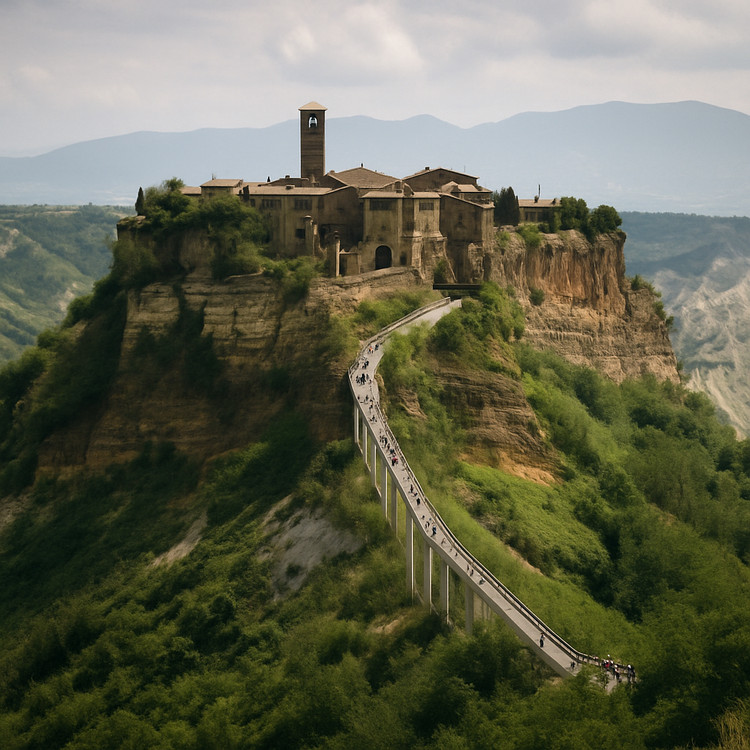
The mystery of Civita lies in why it’s crumbling away, making it a fragile wonder you have to see to believe. Its disappearance is due to the ground under its old walls. The soft rock foundation is slowly being worn away by time and weather.
The Sugar Cube on Wet Sand: Why This City is Dying
The dramatic nickname, La Città che Muore, isn’t just for show—it’s a literal, geological truth. The entire town is built on a large slab of hard volcanic rock called tuff. The problem is that this slab rests on a much softer, more unstable clay base.
The best way to picture it is to imagine a sugar cube sitting on a mound of wet sand. Every time it rains or the wind blows, the clay washes away. This leaves the tuff’s edges unsupported. They are ready to crumble into the valley below.
This constant, slow-motion collapse has carved the incredible landscape surrounding Civita: the Valle dei Calanchi. These calanchi are eerie, finger-like ravines etched into the clay over centuries, creating a stark, almost lunar badlands.
This valley is very beautiful. However, it also shows the forces that are wearing away Civita’s foundation. With each passing year, another piece of the town’s perimeter—a garden, a piece of a wall—is lost forever.
Ironically, this fragile perch is exactly why people settled here in the first place. Over 2,500 years ago, the ancient Etruscan settlement was built on this high plateau. It was a strong natural fortress that was hard to attack. What was once its greatest strength is now its biggest weakness. This change has turned a timeless sanctuary into a town racing against gravity.
Your Walk Across the Bridge to a Lost World
Before you can set foot in the dying city, you must first arrive in the living one. Your journey begins in the modern town of Bagnoregio, where you’ll park and follow the signs to the Belvedere. This clifftop viewpoint gives you your first amazing view. You can see Civita di Bagnoregio in the distance, like a mirage. It’s the perfect place for a postcard photo.
From there, a path leads down to the foot of the iconic pedestrian bridge. The 300-meter (about 1,000-foot) walkway feels like a thread suspended over the immense, empty valley. As you cross, the modern world recedes behind you, and the views on either side are simply staggering. Get ready for the last part of your journey. The climb to Civita’s ancient gate is steep. It’s a final test before you enter a different world.
At the bridge’s entrance, you’ll find a small ticket office. A modest fee of around €5 is required to cross, but this is more than just a toll. The funds go directly to the ongoing, complex, and expensive work needed to protect the town’s weak foundations. In a very real way, your ticket helps buy Civita a little more time.
Once you pass through the dark, cool stone archway at the top, the world changes. The noise of traffic vanishes, replaced by a quiet so deep you can hear footsteps on the cobblestones. You’ve officially arrived.
What to See in a Town with Only 10 Residents
The archway you just walked through is the Porta Santa Maria. It is the main gate into Civita. This gate was built on foundations laid by the ancient Etruscans over 2,500 years ago. Immediately, the modern world falls away. The air grows still, and the silence is broken only by the chime of a distant church bell or the whisper of the wind. This is the first thing to “do” in Civita: simply stop and feel the profound quiet of a town without cars.
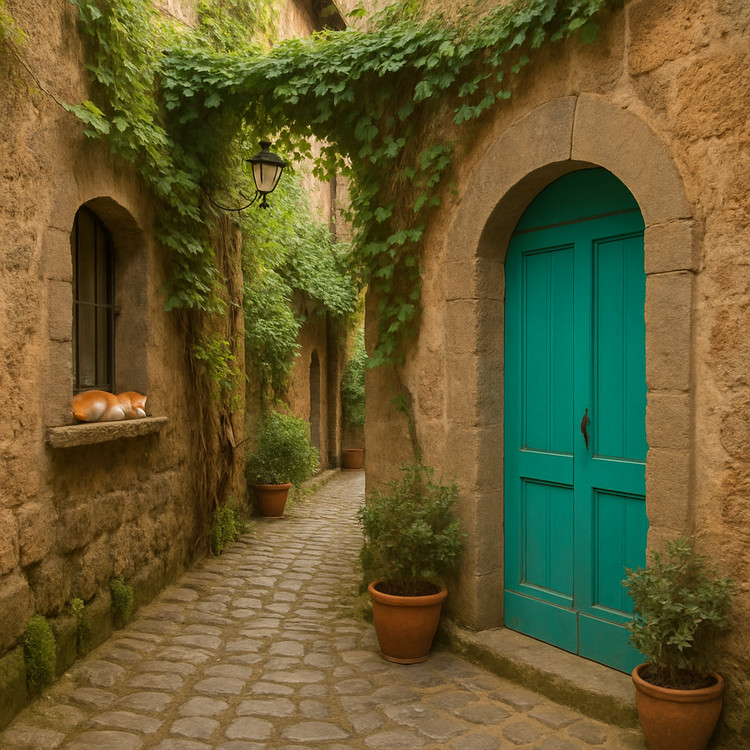
From the gate, the main cobblestone path gently guides you into the heart of the village, the Piazza San Donato. This humble main square, anchored by the Romanesque church of the same name, is the town’s historic soul. But the real magic of Civita isn’t a checklist of sights; it’s the joy of wandering. Turn down any narrow, vine-draped alley. Each one is a possible masterpiece. It could lead to a hidden garden, a sleeping cat on a warm windowsill, or a stunning view over the valley.
This incredible sense of peace is no accident. With a small population you can count on two hands, you are visiting a place that feels like a living museum. The few locals share their home with hundreds of daily visitors, creating a unique and fragile balance.
Can You Eat and Sleep in a Crumbling Village?
Surprisingly, for a town so small, the answer is a resounding yes. Several wonderful restaurants are tucked away in Civita’s ancient buildings. The most memorable ones are built into soft volcanic rock. They provide a cozy, cave-like dining experience that feels far from a typical meal. It’s a chance to enjoy regional pasta and wine from inside the very hill the town rests on.
The experience becomes even more magical if you decide to stay the night. Once the last day-trippers have crossed back over the bridge, an enchanting stillness settles over the village. The few guesthouses and rental apartments give you a rare chance to walk the quiet, lamp-lit alleys. You will feel like you have a medieval kingdom all to yourself. It’s an opportunity to truly hear the history echoing off the stones.
Given this unique exclusivity, a little foresight is crucial. There are only a few tables and rooms on the hilltop. Because of this, dinner reservations and overnight stays are very valuable. If you want to see Civita at night, you need to plan and book ahead. It’s very important.
Your Day Trip Blueprint: Getting to Civita
Reaching a place that feels lost in time requires a bit of modern planning, but it’s more straightforward than you might think. Most visitors using public transport start their journey to Civita di Bagnoregio from two main places. These are the busy capital of Rome and the nearby hilltop city of Orvieto. Choosing your starting point can significantly affect travel time.
The most common routes use both train and bus. The city of Orvieto is the key connection point. From there, you will take a regional bus to the town of Bagnoregio. This town is just before the pedestrian bridge to Civita.
- Route 1: From Rome (Train + Bus, ~2.5 hours total). You’ll take a direct train from Rome’s Termini station to Orvieto, then switch to the local bus.
- Route 2: From Orvieto (Bus only, ~45 minutes). If you’re already staying in Orvieto, the trip is much shorter, involving just one simple bus ride.
A critical tip that will save you a major headache: you must buy your bus tickets before you board. Look for a shop called a Tabaccheria—identifiable by a large white “T” on a blue or black sign. You’ll find one right outside the Orvieto train station. When you buy your ticket, be sure to ask for a round trip (andata e ritorno). Buses in rural Italy often do not sell tickets on board. The small ticket vendor in Bagnoregio might be closed when you want to return. Having that return ticket in your pocket is your guarantee for a seamless adventure.
A Story of Resilience, Not Ruin
After learning about the delicate geology and the stones’ long history, the decision to visit changes. What might have seemed like just another crowded postcard spot is revealed to be a survivor perched on a knife’s edge.
Your decision to visit this dying hilltop town now carries a different weight. The entrance fee is now more than just a toll. It directly helps fund the projects that keep the cliffs stable. The crowds are not just a problem; they are the lifeline for Civita’s economy. They help fund the fight against erosion that threatens the town’s future.
When you go, your first and simplest step toward truly experiencing its soul is to sidestep the midday rush. Arrive early in the morning or stay into the late afternoon, after the tour buses have departed. Find a quiet alley, listen to the wind sweeping through the valley, and feel the immense, silent history beneath your feet.
You no longer see a ruin, but a powerful story of resilience. Civita di Bagnoregio has changed from a simple place to visit into a moment to see. It stands as a fragile and beautiful defiance against what is certain. To walk its bridge is to take part, however briefly, in its incredible and ongoing fight to simply exist.