
You may have seen the photo. It shows a strip of turquoise water, a small pebble beach, and a tall stone bridge. It’s a place that looks more like a fantasy illustration than a real spot on Italy’s famous Amalfi Coast. This hidden gem is the Fiordo di Furore, and its story is far more captivating than the pictures let on.
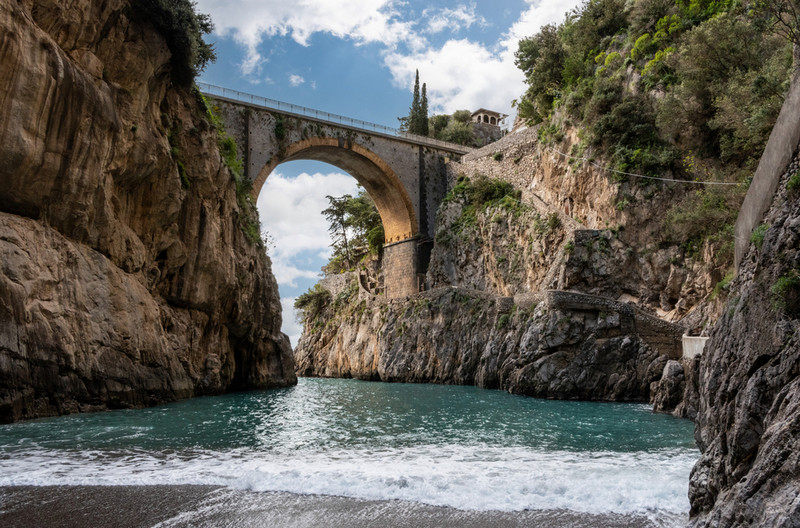
Fiordo di Furore – A Must-See on the Amalfi Coast
For centuries, this deep gorge wasn’t a tourist destination but a secret world of its own. Long before the coastal road was built, a busy village thrived here.
It had fishermen’s homes carved into the rock and paper mills powered by the river. It was a hidden community often called “the village that doesn’t exist.” Local historians and folklore confirm this detail.
So, what is the true story of this stunning Furore inlet, and why is it considered one of the coast’s most unique sites? Let’s explore the history of the famous bridge. We will also share the important details you need to visit this amazing part of Italy.
Why Is There a “Fjord” in Sunny Italy? The Secret Behind the Name
When you hear “fjord,” you probably picture the immense, glacier-carved valleys of Norway. So, what’s one doing on the sun-drenched Amalfi Coast? Italy’s “Fiordo” di Furore is a bit different. Imagine it less as a wide Scandinavian bay and more like a deep, narrow canyon. The sea has moved in, forming a stunning strip of water between tall cliffs.
This incredible gorge wasn’t carved by ice, but by water. Over thousands of years, the Schiato, a small mountain river, cut through the limestone. This created a steep ravine. Geologists call this type of formation a “ria.” The story is simple: it’s an old river valley. This valley was later flooded by the blue Mediterranean Sea.

More than just a geological curiosity, this unique shape is what gives the Fiordo its magic. The tall cliffs serve as a natural shield. They protect the small beach from strong winds. This makes the water very calm and clear. This hidden world was beautiful. It was also a great place for a busy community to thrive, away from the open water.
The ‘Village That Doesn’t Exist’: Uncovering Furore’s Lost World
For centuries, this hidden gorge was a busy place. Furore earned the nickname “the village that doesn’t exist” because it was invisible from the sea. Those charming stone buildings on the cliffs are not just romantic ruins.
They are reminders of a lost industrial center. The river used to power paper mills. Fishermen lived in simple homes called monazzeri. These homes were built into the rock to store their boats and gear. It was a perfectly hidden, self-sufficient community.
This isolation was shattered in 1948 when the Fiordo became a movie star. The famous Italian director Roberto Rossellini picked this dramatic place for an important scene in his film L’Amore. The film stars the well-known actress Anna Magnani.
The film captured the gorge’s stunning beauty. It changed from a local secret to a symbol of Italian Neorealist cinema. It also sparked a famous and turbulent romance between the director and his star on the coast.
Eventually, the old paper industry declined, and the residents moved away, leaving the mills and homes to fall silent. What remains is a powerful sense of history that hangs in the air, turning a simple visit to the beach into something more.
Standing under the famous bridge, you are not just in a lovely cove. You are in the heart of a lost village, filled with stories.
The Big Question: Can You Swim at Furore Beach?
After hearing its amazing story, it’s easy to want to go down those stairs and jump into the blue water. For years, this was one of the most unique swimming spots on the entire coast. So, is Furore beach currently open?
Unfortunately, the answer is no. Due to serious safety concerns, the beach and the staircase leading down to it have been officially closed to the public for several years.
This closure isn’t a temporary measure. The steep, fragile cliffs that make the gorge so dramatic also pose a significant and unpredictable risk of rockfalls.
To protect visitors, local authorities have gated the stairs’ entrance and prohibited access to the beach below. Ignoring these warnings is not only illegal but also extremely dangerous, as several incidents have sadly proven.
To be perfectly clear, here is the current official status:
- Beach Access: CLOSED
- Stairs Access: CLOSED
- Swimming: NOT PERMITTED (from the beach)
While this may be disappointing, your dream of seeing this natural wonder isn’t lost. You just have to adjust your perspective. Thankfully, there are still ways to safely admire the Fiordo di Furore and capture that iconic photograph.
Two Perfect Ways to See the Fjord (Even If the Beach Is Closed)
That postcard-perfect photo you’ve seen? It’s taken directly from the road bridge that spans the top of the gorge. This view is completely accessible and offers the classic, top-down perspective of the tiny beach and turquoise water.
You can simply walk onto the bridge’s pedestrian walkway to safely admire the scene. To see the water glow best, visit in the late morning or early afternoon. This is when the sun is high enough to shine into the deep, narrow inlet.
For a completely different and arguably more dramatic perspective, consider seeing the Furore inlet from a boat tour. From the sea, you can truly appreciate the immense scale of the cliffs that hide this secret cove.
Looking up from the water, the bridge looks very high above you. The old fishing village seems carved into the rock. Many tours from Amalfi or Positano will enter the fjord. They will stop for a few minutes so you can enjoy the beautiful view.
So while the beach itself may be off-limits, you haven’t missed your chance. You can either capture the iconic photograph from above or experience the fjord’s majestic power from below. Reaching the bridge to get that classic shot comes with its own set of challenges, especially when it comes to transportation.

How to Get to the Furore Bridge Without a Car (And Why You Shouldn’t Drive)
While a scenic drive along the coast sounds nice, parking near the Furore bridge is very hard. There is no dedicated parking lot. The few roadside spots are either for residents or are always taken. You might spend more time looking for a parking spot than enjoying the view. This is true on one of Italy’s narrowest and busiest roads. Trust us—this is one adventure where leaving the car behind is the key to a good experience.
The smartest and most stress-free way to reach the bridge is by doing as the locals do: take the SITA bus. This is the regional bus network that connects all the major towns along the Amalfi Coast. For just a few euros, you can get in and let a skilled driver take care of the sharp turns. This way, you can enjoy the beautiful sea views outside the window. It’s efficient, authentic, and completely avoids the parking headache.
You can buy your bus ticket in advance. You can do this at any “tabacchi” (tobacco shop) or ticket office. This is available in towns like Amalfi or Positano. Simply board the bus running between those two main towns. Since there is no official stop for the Fjord, tell the driver you want to get off at “Fiordo di Furore” when you get on. Keep an eye out—as soon as you see the magnificent stone bridge spanning the gorge, that’s your cue to exit.
From either Amalfi or Positano, the journey is a quick, ten-minute ride. The buses can get crowded, especially mid-day, but having your ticket ready makes the process smooth. This easy access is what makes Furore feel like a true discovery. It offers a quiet moment of awe between the busier spots in the region.
Furore vs. Atrani: Choosing Your Perfect Amalfi Coast ‘Hidden Gem’
The Fiordo di Furore is a stunning natural secret. Another name that travelers often mention is Atrani. The key difference is simple but crucial for planning your day.
Think of Furore as a spectacular natural sight—a place you visit to see one specific, stunning thing. Atrani, on the other hand, is a place to be. It is Italy’s smallest town. It has a tiny piazza and a quiet, real rhythm.
A visit to the Fjord is a focused, powerful moment. You’re there to capture the incredible view from the bridge and marvel at the sheer cliffs. It’s an adventure that might take an hour or two, but it isn’t a town; there are no cafes, shops, or streets to wander. The fjord is the entire attraction, an unforgettable stop on your coastal journey.
In contrast, Atrani invites you to linger. Just a ten-minute walk from the busy Amalfi, the small central square feels far away. It has lovely cafes where you can enjoy an espresso and watch life go by. So, which is better? If you want a quick, jaw-dropping photo of a unique natural wonder, Furore is the place to be. If you want to enjoy the calm vibe of a real Amalfi Coast village, visit Atrani for an afternoon.

Is the Fiordo di Furore Worth Visiting? Your 3-Step Action Plan
Now you know the story behind the famous photo. You can appreciate the Fiordo di Furore for what it truly is. It is a gorge filled with history and drama. To make your visit perfect, use this simple action plan.
Your Furore Visit Checklist:
- Check the official beach status before you go (it is currently closed).
- Plan to use the SITA bus, not a car.
- Visit in the late morning for the best light on the bridge.
Even if you only see it from the road, you are not just a tourist anymore.
You are part of the secret. Knowing the full story of Furore means appreciating its unique history. Go find that dramatic slice of the coast for yourself and discover a perspective that most visitors completely miss.