
When you picture Italy, you probably imagine sun-soaked Tuscan hills or a bustling Venetian canal in July. But what if the country’s best-kept secret is a winter trip? Swapping busy crowds for cozy cafes can improve your Italian vacation. High prices can be replaced with holiday cheer. This change might be just what your dream trip needs.
Italy Winter Travel: Discover Top Destinations & Activities
These off-season travel benefits are game-changers. Instead of the crowded chaos at the Trevi Fountain in summer, picture enjoying it on a cool December morning. Industry data shows that visiting Italy in the off-season is cheaper. Both flights and hotels cost less. This means you can spend more on pasta and wine.
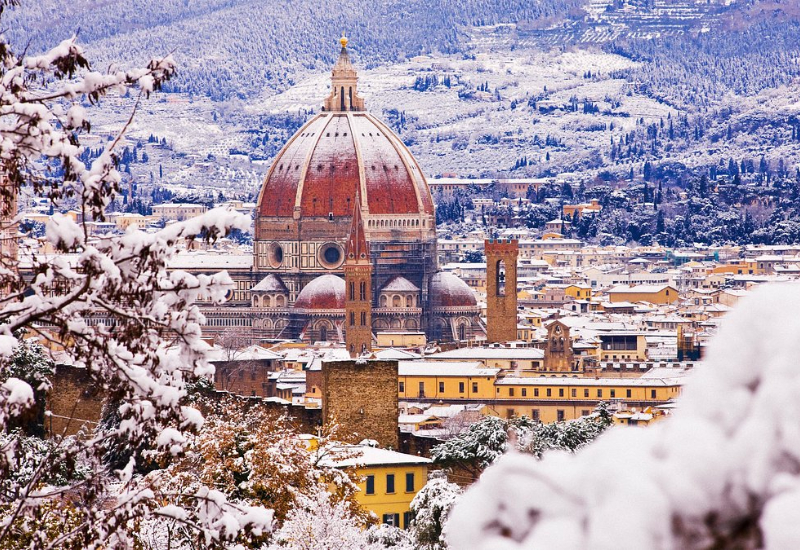
This isn’t just about logistics; it’s about discovering a more intimate, romantic atmosphere. Picture Rome’s ancient stones glistening after a rain shower as the warm glow of a trattoria beckons you inside. What if the most magical version of Italy isn’t sun-drenched, but wrapped in a soft winter glow?
Rome or Florence in January? How to Enjoy the Big Cities Without the Crowds
For anyone wondering if attractions are open in Italy in winter, the answer is a resounding yes. If you’re considering a trip to Rome or Florence in January, you’ll find that the big cities are very much alive. The Colosseum, the Vatican Museums, and Florence’s Duomo are still open. However, the long summer lines are gone. This transforms your visit from a battle against the heat into a more relaxed and personal journey through history.
When the sun sets early, Italians embrace a tradition that feels tailor-made for the season: aperitivo. Think of it as a sophisticated and cozy happy hour. In the evenings, bars in the city fill with locals relaxing over cocktails or wine. They enjoy a free spread of tasty snacks. It’s the perfect way to warm up after a day of sightseeing and feel the city’s authentic, convivial pulse.
This freedom from crowds is most magical inside world-class museums.
Imagine standing in Florence’s Uffizi Gallery. You can admire Botticelli’s The Birth of Venus without peeking over many shoulders. You can take your time in the Sistine Chapel or explore the Roman Forum at your own speed. This way, you can really appreciate the importance of these places.
The cities provide a winter experience full of culture. However, they are only one part of Italy’s winter charm. If your idea of a perfect cold-weather trip involves snow-dusted peaks, the country’s northern mountains are calling.
Your Guide to a Winter Wonderland: The Dolomites vs. The Alps
For a complete change of pace, a northern Italy itinerary in winter delivers a true snow-globe fantasy. Here, in the shadow of Europe’s highest peaks, the country trades ancient ruins for alpine charm. The two main places to visit are the Western Alps and the Dolomites. They offer different experiences. You can choose between top-notch resort skiing or a unique cultural landscape.
What makes the Dolomites so special is their jaw-dropping scenery and distinct culture. These jagged, pale mountains, a UNESCO World Heritage site, glow pink at sunrise and sunset. In the valleys, charming villages with onion-domed churches and wooden chalets dot the landscape. These buildings show the area’s Austrian and German heritage. This blend makes it feel like you’ve stumbled into a completely different country.
This unique culture is most magical during the holidays. Any Italy Christmas markets guide will point you to this region, known as South Tyrol.
From late November to December, towns like Bolzano and Merano have festive markets. The air is filled with the smell of gingerbread and spiced mulled wine, known as vin brulè. Browsing handcrafted wooden ornaments in a softly lit piazza, surrounded by snow-dusted peaks, is an unforgettable experience.
If you dream of a classic ski vacation, the Western Alps near France and Switzerland may be perfect. They have larger, traditional resorts and many slopes to enjoy. But what if snow isn’t on your wish list? Italy has an answer for that, too.

Is Southern Italy Warm in Winter? Planning a Trip to Sicily & Beyond
If you’re looking to escape the snow entirely, Southern Italy offers a welcome alternative. But is southern Italy warm in winter?
The answer is a pleasant “mild,” not tropical “hot.” Forget packing a swimsuit. Instead, imagine a classic Mediterranean winter. Daytime temperatures are cool, usually between 50 and 60°F (10 and 15°C). You will want a light jacket. While you’ll see some rain, you’ll also be rewarded with brilliantly sunny days perfect for exploring.
This milder climate is ideal for sightseeing without the oppressive summer heat. Imagine exploring the vast ruins of Pompeii.
Picture wandering through Sicily’s ancient Greek Valley of the Temples. You can do this without fighting through crowds or searching for shade. You have the time and space to enjoy these famous sites in a calm atmosphere that is hard to find in July.
While cities like Naples and Palermo are lively, it’s smart to plan a trip to Sicily or the Amalfi Coast in winter. Many hotels and restaurants in smaller, beach-focused towns do close down. To have the best experience, stay in a larger city. Take day trips to the coast. Enjoy the peaceful beauty during the day. Then, return to the lively energy of city life at night.
Beyond the Museums: How to Experience Italy’s Unique Winter Festivals
Winter travel in Italy is more than quiet museums. It’s a chance to see the country alive with special celebrations. From late November to early January, big squares in cities like Florence and Bologna turn into Christmas markets. Here, you can shop for handmade gifts and enjoy mulled wine under bright holiday lights.
Once the holidays fade, Italy prepares for its most famous spectacle. The Carnevale di Venezia, or Carnival of Venice, is a grand festival before Lent. It makes the city feel like a real-life masquerade ball. The Carnevale di Venezia schedule changes each year due to Easter. It usually happens over two weeks in late January or February. During this time, the canals and alleys fill with people wearing beautiful masks and historical costumes.
Seeing this tradition is unforgettable, but it requires thoughtful planning. Here’s a tip for experiencing Venice in winter without peak prices:
visit the week before Carnevale officially begins. The city is buzzing with excitement. Many people in costumes are already out. However, places to stay are much more affordable. You get to enjoy the magic without the madness.

What to Pack for Italy in December: The Smart Traveler’s Checklist
Deciding what to pack for Italy in December can be tricky. A warm day in Rome is very different from a snowy night in the mountains. The secret isn’t a single bulky coat, but a flexible system savvy travelers swear by: layering.
This approach allows you to adapt to changing conditions by simply adding or removing an item. Your outer jacket and main walking shoes must be waterproof. A sudden rain shower can quickly ruin a day of exploring.
To build your perfect travel wardrobe, focus on these five essentials:
- Base Layers: A few thermal or long-sleeve shirts.
- Mid-Layer: A cozy fleece or a classic wool sweater.
- Outer Layer: A waterproof and windproof jacket.
- Footwear: Comfortable, waterproof walking shoes or boots.
- Accessories: A warm hat, gloves, and a stylish scarf.
Driving vs. Trains in Italy’s Winter: A Practical Guide
For travel between Italy’s iconic cities, the high-speed train network is fast, comfortable, and brilliantly efficient. Trains connect towns like Rome, Florence, and Venice in just a few hours. They take you right to the city center. This helps you avoid traffic, bad weather, and the stress of unknown roads.
Within the cities themselves, driving is strongly discouraged. Most historic centers are designated as restricted traffic zones (ZTL, Zona a Traffico Limitato). If you drive into a camera-monitored area by mistake, you will get a hefty fine.
A car can be the key to freedom. It helps you explore the countryside or plan a winter trip through the Alps in northern Italy. For discovering small villages or reaching remote ski resorts, a rental provides the flexibility that trains can’t match.
Just be aware that driving in Italy during winter comes with specific rules. In many northern and central areas, cars must have winter tires or snow chains. This rule is in effect from mid-November to mid-April. Confirm your rental vehicle is adequately equipped to ensure a safe and compliant trip.

Your First 3 Steps to Planning an Unforgettable Italian Winter Trip
Winter travel in Italy gives you a closer, more personal experience. You can enjoy misty canals and Roman streets lit up with holiday lights instead of busy, sunny days. It isn’t just a different season; it’s an entirely different kind of discovery.
Planning your trip begins with a few simple decisions. First, choose your ideal winter mood—cozy city culture or a snowy mountain escape? From there, narrow your focus to just one or two key destinations to truly savor the experience. Finally, start exploring flights to see just how affordable your trip can be.
The quiet, real magic of a winter trip to Italy is waiting for you. You now have the map and the confidence to find it.