
Picture yourself enjoying a glass of Chianti on a sunny terrace. You look out over a valley filled with cypress trees and old farmhouses. This isn’t just a movie scene. It’s a real afternoon in Tuscany. It’s more possible than you think.
Tuscany Travel Guide: Must-See Sights & Hidden Gems
But planning a trip to Tuscany can quickly become overwhelming. Should you stay in a city or the countryside? Rent a car or take the train? How many towns can you realistically visit in a week without feeling rushed?
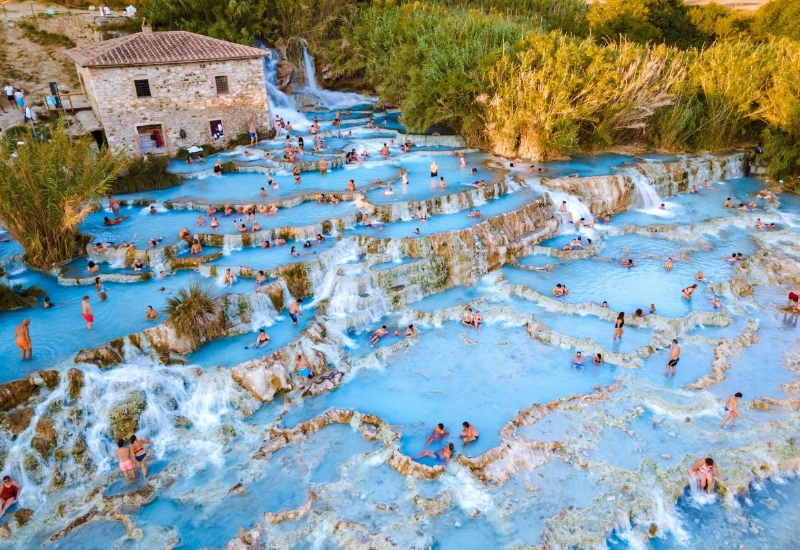
The secret is to see Tuscany as a collection of unique worlds. Florence has Renaissance beauty and famous art. The Chianti region has vine-covered hills that invite a relaxing drive. Further south, the Val d’Orcia offers golden, poetic landscapes.
This guide breaks down 10 key experiences. These will help you see the best of Tuscany without stress. “From picking your home base to ordering the best pasta, this is your guide to making that daydream come true.”
#1: Immerse Yourself in Renaissance Glory in Florence
Florence is the undisputed heart of the Renaissance, a city so packed with masterpieces it can be daunting. To avoid museum fatigue, focus your energy on the “big three,” which truly capture the city’s artistic soul.
- Michelangelo’s David at the Accademia Gallery.
- Botticelli’s The Birth of Venus at the Uffizi Gallery.
- Brunelleschi’s Dome, the breathtaking climb to the top of the cathedral for an unmatched city view.
 For these essential sights, the golden rule is to book tickets online well in advance. This is the secret to skipping ticket lines that can stretch for hours, allowing you to walk right in at your reserved time. Beyond the museums, remember that Florence itself is an open-air gallery. In Ponte Vecchio, you can see great art by walking across the bridge.
You can also admire the replica statues in the busy Piazza della Signoria. This blend of world-class museums and stunning public spaces makes Florence the perfect starting point for your Tuscan journey.
#2: Decide Your Travel Style: Car Freedom vs. Train Simplicity
Your most important planning decision is whether you will explore Tuscany by car or by train. Your answer will shape your whole trip. It will determine whether your journey is about exploring the countryside or about quickly visiting cities.
Renting a car offers the ultimate freedom to chase a sunset down a cypress-lined road. However, it comes with a major warning: the ZTL, or Zona a Traffico Limitato.
These are restricted driving zones in nearly every historic town center, marked by a red circle sign. If you drive past one without a permit, you’ll receive a big fine months later. It’s an unwelcome surprise.
For a smoother experience, Italy’s great train system, mainly run by Trenitalia, is your easygoing best friend. You can easily take day trips from Florence to places like Siena and Pisa. You won’t have to worry about navigation or parking.
This convenience has its limits. Trains cannot take you to a quiet hilltop villa or an agriturismo. An agriturismo is a working farm that offers guest rooms.
 Here’s the breakdown:
- Rent a Car If: You want to explore the deep countryside (like the Val d’Orcia), stay in an agriturismo, and have total schedule freedom.
- Use Trains or Buses If: You are mainly visiting cities, want to avoid the stress of driving, and prefer a cheaper option.
#3: Choose Your Home Base: Florence, Siena, or the Countryside?
Your choice of a home base determines the entire rhythm of your trip. Florence is a classic choice. It is a lively center of Renaissance art. It is also a great place if you are traveling by train. But it has a historic rival that offers an equally captivating experience.
Think of Florence as a grand, open-air museum, buzzing with energy. Siena, its beautiful medieval competitor, feels more intimate and lived-in.
Florence shines with its Renaissance beauty. In contrast, Siena captivates with its Gothic style and the famous shell-shaped square, the Piazza del Campo. It’s a major hub with good bus connections. This makes it a great base for exploring the region.
For a true escape, your best base might not be a city at all. Staying in the countryside, like at an agriturismo or a quiet village, means swapping museum lines for scenic drives.
You trade city noise for peaceful mornings. This is the best way to relax and enjoy the famous landscape. Just remember, you need a car for this path. With your own car, you can easily explore famous places like the Chianti Classico wine route.
#4: Taste Your Way Through the Chianti Classico Wine Route
The famous wine route between Florence and Siena isn’t just one road, but a whole territory of vine-covered hills. To know you’re in the official historic zone, look for road signs featuring a black rooster on a gold background. This is the Gallo Nero, the proud symbol of Chianti Classico wine, and your sign that you’ve come to the right place. Following these signs is a simple way to ensure your scenic drive is authentic as well.
Wineries here include large, historic castles with formal tastings in old cellars. They also have small, family-run farms that provide a more personal experience.
The choice is up to you: do you want the beauty of an old estate or a personal chat with the grape harvester? Many smaller farms also produce incredible olive oil, giving you another delicious reason to visit.
Chianti wine tasting tours are a great choice. They handle the driving, so everyone in your group can enjoy the samples. If you want to be spontaneous, driving yourself lets you explore charming towns like Greve or Radda. You can find hidden gems at your own pace. Just be sure to book tastings in advance, especially during peak season.
While Chianti is famous for its lush vineyards, it’s not the only landscape that defines Tuscany. For the iconic rolling hills and cypress-lined roads you’ve seen in photographs, your journey will need to take you further south.
#5: Find a Postcard-Perfect View in the Val d’Orcia
That quintessential Tuscan photograph of a winding road lined with cypress trees? You can find it in the Val d’Orcia. This UNESCO World Heritage site is located south of Siena. The landscape features large, rolling hills of gold and green. For the most famous shot, look for the winding road just outside the town of Monticchiello.
Another iconic view, often called the “Gladiator” spot, is a cypress-lined path leading to a farmhouse near Pienza. Exploring the Val d’Orcia scenic drive is less about a set route and more about chasing these breathtaking moments.
Reaching many of these viewpoints involves driving on what the Italians call strade bianche, or “white roads.” These are unpaved country lanes made of packed gravel and dust. Don’t be intimidated; they are a key part of the region’s charm. The most important tip is to simply take it slow, especially after it rains. A little dust on your car is a badge of honor, proof that you’ve ventured off the beaten path to find the best views.
Unlike the vineyard-dense hills of Chianti, the Val d’Orcia is a softer, more sweeping landscape defined by wheat fields and grazing sheep.
This agricultural heartland, with the stunning hilltop town of Pienza at its center, is the home of Pecorino cheese. After a morning of taking photos, relaxing in Pienza with a view and a plate of its famous food is a great experience.
#6: Eat a Perfect Tuscan Meal (And Understand the Menu)
A traditional Tuscan menu is simple once you understand its structure. It’s usually split into a primo (first course) and a secondo (second course). Think of the primo as pasta, risotto, or soup, while the secondo is the meat or fish dish. You are not required to order from every section! It’s perfectly normal to just have a primo for lunch or a secondo for dinner.
Before the bill arrives, you’ll notice a small charge on it labeled coperto.
This isn’t a tourist trap; it’s a standard per-person cover charge that includes your bread and the table setting. It’s not the tip. In Italy, tips are not usually expected. However, rounding up the bill is nice for good service.
For an authentic taste of traditional Tuscan food, look for these classics. They are staples for a reason, and they make a perfect introduction to what to eat in Florence and beyond.
- Pappa al Pomodoro: A thick, hearty tomato and bread soup that’s pure comfort food.
- Tagliatelle al Ragù di Cinghiale: Ribbon-like pasta with a rich, savory wild boar sauce.
- Bistecca alla Fiorentina: A giant T-bone steak, grilled rare and seasoned simply. It’s huge—always order it to share between at least two people.
#7: Know the Best and Worst Times to Visit Tuscany
While Tuscany is beautiful year-round, the secret to a perfect trip is timing. For the best mix of nice weather, fewer crowds, and lower prices, choose the shoulder season. This is late spring (April-May) and early fall (September-October).
You will enjoy sunny days that are great for exploring. The weather is not as hot as in summer. You can also find better deals on flights and places to stay.
Summer (June-August) brings bright sunshine. However, it also brings large crowds and high prices, especially in Florence and the popular hill towns. The heat can be intense, making midday sightseeing a challenge. On the other hand, winter brings a calm and moody landscape with few tourists. However, be ready for colder weather. Some restaurants and attractions may have shorter hours, especially in the countryside.
One crucial exception for timing your visit involves Siena. The city hosts the Palio di Siena. This is a historic and thrilling bareback horse race.
It takes place on July 2nd and August 16th. While a spectacular cultural event, the city becomes incredibly crowded and expensive. Unless the race is your primary reason for visiting, it’s best to avoid Siena on and around these dates.
#8: Bring Your Trip to Life: A Sample 7-Day Tuscany Itinerary
You don’t have to choose between Florence’s art-filled museums and the iconic rolling hills. The secret to a perfect first trip is to split your stay, giving you the best of both worlds.
By spending a few days in the city and the rest in the countryside, you can enjoy the culture and relax in nature. This plan is great for a one-week trip. You can explore on foot first. Then, you can pick up a car for the freedom of the open road.
This classic Florence and Chianti itinerary balances sightseeing with pure relaxation and can be easily adapted to your interests.
Sample “Florence & Countryside” Itinerary:
- Days 1-3: Arrive in Florence. Walk around the city. Visit the Uffizi Gallery to see the art. Climb the Duomo for amazing views. Enjoy the lively food scene.
- Day 4: Pick up a rental car and drive into the Chianti region. Settle into your agriturismo and enjoy the sunset.
- Days 5-6: Explore the countryside. Dedicate one day to wine tasting and visiting charming hill towns like Greve or Radda. Use the next for a scenic drive south to the famous Val d’Orcia valley.
- Day 7: Enjoy one last Tuscan breakfast before driving to the Florence airport for your departure.
#9: Unlock the Secret to a Perfect Stay: The Tuscan Agriturismo
An agriturismo is a working farm—producing wine or olive oil—that also offers rooms. The experience is personal, and meals are often made with ingredients grown just steps from your door. It’s a true taste of Tuscan life and one of the best ways to find authentic accommodation in regions like Chianti.
The main difference between an agriturismo and a hotel is the atmosphere. You trade a 24/7 reception for personal character and connection. Instead of a formal concierge, you might get tips from the owner over breakfast. It’s about feeling like a guest in a family home. You trade standard convenience for the unique charm of the countryside.
An agriturismo stay is perfect if you want an authentic base to explore the rolling hills. The one non-negotiable: you will need a car, as they are in a rural area. If you prefer walking to shops and relying on trains, a city-center hotel is the better choice.
#10: Your Final Checklist Before You Say “Ciao!” to Tuscany
With a framework for the big decisions, you can start planning your adventure. To begin, focus on these first crucial steps. For travelers from the USA, we’ve also included a key tip on money and phones.
Your Top 3 Planning Steps:
- Choose Your Season: Aim for the “shoulder season” (spring or fall) for the best balance of good weather and fewer crowds.
- Car or No Car?: Decide if you want the freedom of a car for the countryside or the ease of trains between major cities.
- Book Your Base: Secure your first 2-3 nights’ accommodation so you can land with confidence.
Finally, your first step into the local culture can be as simple as one word. As you enter any shop or café, make a habit of saying “Buongiorno.” It means “good day,” but it’s a small gesture of respect that opens doors and earns warm smiles. With that single word, you’re not just another tourist; you’re a welcome guest ready to experience the best of Tuscany.