Everyone dreams of an Italian vacation, but many also dread summer’s massive crowds and sweltering heat. How is Italy in spring? What if you could have the warm sun without the sweat and the breathtaking views with more room to breathe?
Italy in Spring: Top Travel Spots & Tips
The secret is to visit Italy in spring. This period is known as the “shoulder season”—the magical sweet spot between the quiet of winter and the frenzy of summer. It offers the best balance of pleasant weather and manageable numbers of fellow visitors.
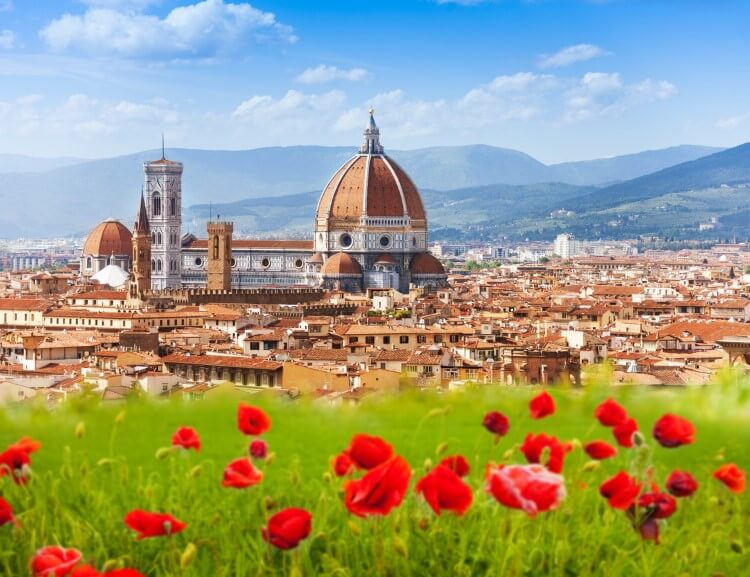
Imagine wisteria dripping over Florentine balconies or Tuscan hills so green they almost glow. Beyond this unique seasonal beauty, visiting before the summer rush often means finding better flight and accommodation prices.
For instance, a three-hour queue for the Colosseum in July can shrink to a manageable 45 minutes in April. That saved time gives you more of your vacation back, perfect for discovering a hidden trattoria or enjoying one more gelato by the river.
How to Choose Your Perfect Italian Spring Trip:
A Regional Guide
With a country that stretches over 700 miles from the Alps to the Mediterranean, “spring weather” in Italy can mean very different things. To plan a great trip, match your destination to the season by thinking of the country in three distinct climate zones, each offering a unique experience from March through May.
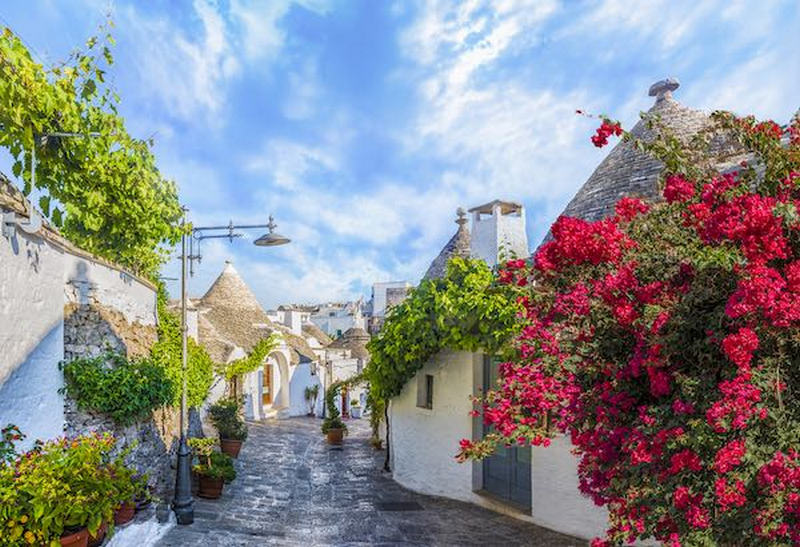
In the North, home to Milan, Venice, and the Dolomites, spring is just beginning to unfold. Early in the season, you’ll find crisp, cool air perfect for city exploration without the summer heat. While the highest mountain passes may still be snowy, the northern lakes like Como and Garda begin to bloom, offering breathtaking views.
Central Italy is the classic springtime sweet spot. Regions like Tuscany and Umbria, along with cities like Rome and Florence, experience pleasantly warm, T-shirt-and-light-jacket weather. This is the ideal time to see the rolling countryside at its most vibrant or explore ancient ruins in the gentle sun.
For a true taste of sunshine, head to the South. The Amalfi Coast, Puglia, and the islands of Sicily and Sardinia are already warming up. If you’re deciding between Tuscany and the Amalfi Coast, the South is your best bet for warmer days and your first chance at a beach visit, making it an ideal place to get a head start on summer.
See Rome’s Ruins & Florence’s Art in Peace:
Your Italy in Spring Strategy
Many travelers dream of exploring Rome’s Colosseum and Florence’s Renaissance masterpieces, and spring offers a layer of magic that summer visitors miss. Beyond the pleasant weather, the cities themselves are in bloom. In Florence, you can wander through the public Rose Garden for free or witness the famous purple wisteria tunnel at the Bardini Garden—a sight that exists only in April and May. Rome has its own version on Aventine Hill, where the municipal rose garden opens to the public near the Circus Maximus.
While spring is the “shoulder season,” don’t mistake that for “empty.” The secret to enjoying the main attractions is to book your tickets online and well in advance. For high-demand sites like the Uffizi Gallery in Florence or the Colosseum in Rome, securing your spot a few weeks in advance lets you bypass the main ticket lines, which can still be hours long. This simple step transforms your day from one of waiting to one of wandering.
Of course, a spring trip can include rainy days. Instead of seeing it as a setback, think of it as an opportunity. A downpour in Florence is the perfect excuse for a hands-on pasta-making class, while a gray day in Rome is ideal for exploring the opulent Borghese Gallery or diving into the city’s incredible, and mostly covered, food markets.

Coastal Dreams: Choosing Between the Amalfi Coast and Cinque Terre in Spring
If your Italian dream involves sparkling sea views more than ancient frescoes, the coastline beckons. Two of Italy’s most famous stretches, the Amalfi Coast and Cinque Terre, come alive in spring but offer two very different experiences. Your choice depends on whether you prefer hiking between villages or lounging in a glamorous seaside town.
Cinque Terre, a national park in northern Italy, is a hiker’s paradise.
Its five cliffside villages are connected by a famous network of trails, most notably the Blue Trail (Sentiero Azzurro). Spring is the absolute sweet spot for hiking here; the paths have reopened after winter, the landscape is lush, and the summer heat has yet to arrive, making the steep climbs much more enjoyable.
Further south, the Amalfi Coast offers a different kind of glamour with its winding scenic drives and chic towns like Positano cascading down to the sea.
While it’s less focused on hiking, you can still find incredible walks like the aptly named Path of the Gods (Sentiero degli Dei). This region is ideal for those who want to mix relaxation with breathtaking scenery.
Both are stunning, but while Cinque Terre is best explored on foot, the Amalfi Coast rewards those who travel by car, bus, or boat. From April onwards, ferry services ramp up in both regions, offering a wonderfully scenic way to hop between towns. By late May, the sea is often just warm enough for your first brave swim of the year.
A Foodie’s Guide to Spring:
What to Eat and Where to Find It
For food lovers, spring in Italy is less a season and more a celebration. As the country sheds its winter coat, the cuisine becomes lighter, brighter, and incredibly fresh. This is the time for simple pleasures, like enjoying bright green fava beans dipped in salt and paired with sharp, crumbly pecorino cheese—a classic Roman snack. It’s the perfect representation of the season: simple, vibrant, and delicious.
In cities like Rome, carciofi (artichokes) are king.
The must-try dish is carciofi alla giudia, or Jewish-style artichokes. The entire vegetable is deep-fried until the outer leaves are as crisp as potato chips, revealing a tender, buttery heart. It’s a seasonal delicacy that beautifully showcases how Italians transform a humble ingredient into something unforgettable.
To experience this seasonal bounty like a local, keep an eye out for a sagra. A sagra is a local food festival, often dedicated to a single ingredient at its peak, like wild asparagus (asparagi selvatici) or strawberries. If you’re driving through Tuscany in spring, you’ll see signs for these festivals dotting the country roads. Following one is a fantastic detour that guarantees an authentic cultural experience.
For the ultimate immersion, consider staying at an agriturismo.
These are working farms that offer accommodation and meals, inviting you to the source of the harvest. Imagine eating dinner made with produce picked just hours before, giving you a true taste of the land.

Lake Como or Lake Garda in April? A Guide to Italy’s Lakeside Spring
The allure of Italy’s northern lakes is undeniable, especially as they awaken in spring. Deciding between the two most popular, Como and Garda, comes down to the atmosphere you’re looking for. They may be neighbors, but their personalities are worlds apart.
For classic romance and dramatic scenery, Lake Como is your answer. In spring, the steep hillsides erupt in color, and the grand villa gardens are at their peak.
A visit to Villa Carlotta is a must, where massive displays of azaleas and rhododendrons create a painterly landscape. Strolling through the elegant, cobbled streets of a town like Bellagio feels like stepping directly into a postcard.
If you prefer a more active and spacious feel, Lake Garda is the better fit. As Italy’s largest lake, its southern end often enjoys slightly warmer, sunnier weather earlier in the season. This makes it a hub for outdoor enthusiasts looking to cycle along the waterfront or explore charming towns. The unique peninsula town of Sirmione, with its striking medieval castle seemingly floating on the water, is a fantastic base for exploration.
Ultimately, the choice is simple: pick Lake Como for its lush, intimate gardens and sophisticated villas, and choose Lake Garda for a more active vacation with a wider variety of towns and outdoor pursuits.
How to Navigate Italy’s Spring Holidays Like a Pro
One of the best-kept secrets for a smooth Italian vacation is knowing the local holiday calendar. While spring has fewer crowds than summer, several national holidays create popular long weekends for Italians. Plan carefully around Easter and two key dates in late April and early May to avoid sold-out trains and attractions.
The most significant holiday is Easter, but the date that truly impacts travel is the Monday that follows, known as Pasquetta (Little Easter).
On this beloved national holiday, Italian families escape the cities for picnics or day trips. Rather than being frustrated by closures, consider joining in! Pack a lunch of bread, cheese, and wine and head to a local park for a truly authentic experience.
Just as the Easter crowds subside, Italy gears up for two more celebrations. April 25th marks Festa della Liberazione (Liberation Day), celebrating the end of Nazi occupation. A week later, on May 1st, is Festa dei Lavoratori (Labor Day).
Both are public holidays, and if they fall near a weekend, Italians often take advantage of the ponte (bridge) to create a mini-vacation.
If your travel dates overlap with these holidays, it is essential to book high-speed trains and tickets for major museums—like the Uffizi Gallery or the Vatican Museums—weeks, if not months, in advance. A little foresight will ensure these local holidays are a charming part of your adventure rather than a travel headache.
What to Pack for Italy in Spring:
The Simple Art of Layering
Wondering what to pack for Italy in May or April? The secret isn’t a massive suitcase—it’s mastering the art of layering. Springtime in Italy is beautiful but fickle; a sun-drenched morning can easily become a chilly, rainy afternoon. Bring versatile pieces you can add or remove as the day changes.
Your packing strategy should revolve around five essential items that work together for cobblestone streets and countryside cafes alike:
- A light waterproof jacket, like a classic trench coat
- One or two sweaters or cardigans
- Comfortable, water-resistant walking shoes
- A large, versatile scarf
- A compact travel umbrella
That scarf, in particular, is your secret weapon.
It’s perfect for warmth during a cool evening, but it also serves a critical function: many of Italy’s magnificent churches require visitors to cover their shoulders and knees as a sign of respect. Draping a scarf over your shoulders is an easy and elegant solution. With a smartly packed bag, you’re ready for any weather.

How to Travel by Train in Italy in Spring
Once you’ve packed your layers, the next step is figuring out how to get from city to city. While renting a car sounds romantic, navigating narrow streets and confusing parking zones is not. For an efficient journey between hubs like Rome, Florence, and Venice, the train is your best friend. It’s fast, affordable, and drops you right in the heart of the action.
Italy’s rail network has two main services. The high-speed Frecce trains connect major cities in just a few hours and require a reserved seat, so it’s wise to book these in advance. In contrast, the slower Regionale trains are like local buses, making more stops and connecting smaller towns to bigger cities. They offer more flexibility and are perfect for spontaneous day trips.
The single most important tip for regional train travel is to validate your ticket before boarding. For a Regionale ticket without a specific time, look for a small green or yellow machine on the platform. Simply slide your paper ticket in to get it time-stamped—an act called convalidare. This quick step activates your ticket; failing to do so can result in a hefty fine. Mastering this system unlocks the entire country for your spring itinerary. By choosing the right train and always remembering to validate, you’re not just avoiding traffic jams; you’re traveling like a savvy local.
Your Italian Spring Adventure Starts Now
Italy in spring is no longer a secret—it’s a smart choice. Imagine wisteria-draped balconies, vibrant green hills, and ancient wonders without the summer crowds. This isn’t just a dream trip; it’s an achievable plan.
Turning this vision into reality is simple. Start with three steps:
- Choose your focus: Will it be the art-filled cities, the scenic coastline, or the tranquil lakes?
- Check the calendar: Look at late April or May for the best balance of good weather and lower prices.
- Book one thing: Reserve your flight or your first hotel. Taking that first small step is all it takes to make the journey real.