Nervous about eating out in Italy? Wondering what to tip or why the bill isn’t coming can add stress to what should be a magical experience. This guide will walk you through everything you need to know to dine in Italy with the confidence of a local.
Tips for Eating Out in Italy: Etiquette Guide
Before you even think about the menu, the first challenge is choosing where to eat—and when. In Italy, most restaurants don’t open for dinner until 7:30 PM or later.
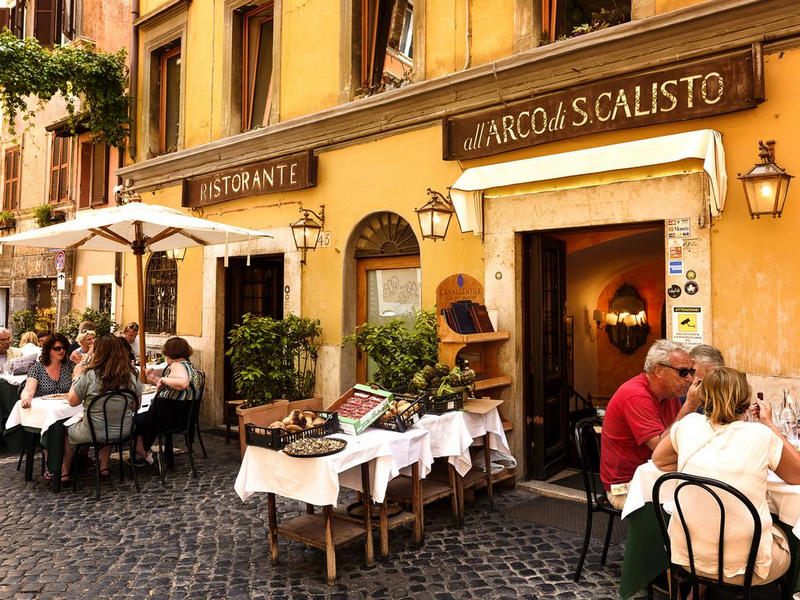
Finding the right atmosphere for your meal means understanding the key difference between a ristorante, a trattoria, and an osteria.
The trattoria vs osteria vs ristorante distinction is your first key to eating out in Italy. A ristorante is generally the most formal, often with an ambitious menu, professional service, and higher prices. A trattoria is a family-run spot focused on traditional regional food. An osteria, is a simple wine bar, now offers a rustic and affordable experience.
So, where should you go? For a special celebration, a ristorante provides the right ambiance. For a hearty, classic pasta dish in a bustling room, seek out a trattoria. And for a simple plate of food with a glass of excellent house wine, an osteria is perfect.

Your First 5 Minutes: How to Order Water and Handle the Bread Basket
Shortly after you’ve settled in, your server will approach to ask about water. Unlike in many countries where iced tap water is the default, in Italy, you’ll be ordering a bottle for the table. Your two choices are simple: acqua naturale (still water) or acqua frizzante (sparkling). Just confidently state your preference, and you’ve successfully handled your first interaction.
A basket of bread will likely appear as well. While it’s tempting to fill up, Italian food etiquette treats this bread as an accompaniment to your main meal.
It’s not an appetizer, which is why you typically won’t find a plate of olive oil or butter for dipping served alongside it. The cost for this is almost always included in the coperto, a small, per-person cover charge that you’ll see on the bill.
How to Order Like a Pro when Eating Out in Italy
With your water on the way, your attention turns to the menu. You’ll immediately notice it isn’t a single long list of food but is organized into distinct sections. A traditional Italian meal is presented as a progression of courses, but it’s a flexible path, not a mandatory marathon. You’re meant to pick and choose the parts of the journey that appeal to you.
Here’s a simple guide to what each section means:
- Antipasto: The starter. This is the Italian equivalent of an appetizer, often a plate of cured meats (salumi), cheeses (formaggi), or bruschetta.
- Primo: The first course. This is where you’ll find pasta, risotto, or soup. Note that pasta is considered a starter course, not the main event.
- Secondo: The main course. This section features heartier dishes, usually meat, poultry, or fish.
- Contorno: The side dish. Sides like roasted vegetables, potatoes, or a simple salad are ordered separately.
- Dolce: Dessert. The sweet finish to the meal, from tiramisù to gelato.
The most important rule: you are not expected to order from every category. Ordering all five courses is rare and typically reserved for long, celebratory feasts. It’s perfectly normal for a diner to have just a primo, or perhaps an antipasto, followed by a secondo.
Pay special attention to that contorno section. In Italy, your secondo will arrive on its own plate, beautifully unadorned. If you want a side of roasted potatoes with your chicken or a salad with your fish, you must order it as a separate contorno.
Eating Out in Italy: 3 Common Dining “Mistakes” That Instantly Mark You as a Tourist
Now that you can navigate the menu, let’s cover a few small but significant details of Italian food etiquette. Avoiding these common slip-ups won’t just help you blend in; it will deepen your appreciation for the culture behind the cuisine. These aren’t rigid laws, but rather local customs that show you respect the food you’re about to enjoy.
First, a golden rule: never ask for Parmesan cheese on a seafood dish (pasta ai frutti di mare, for example). Italians firmly believe that the strong flavor of aged cheese completely overpowers the delicate taste of fish and shellfish. Sprinkling it on is seen as an insult to the chef’s carefully balanced recipe, and your waiter might even politely decline the request.
You’ll also notice a basket of bread on your table, but it isn’t an appetizer to be eaten with olive oil before your meal arrives. Instead, its primary purpose is to soak up the delicious, leftover sauce on your plate after you’ve finished your pasta.
This beloved practice is called fare la scarpetta, which charmingly translates to “make a little shoe” for scooping. It’s the ultimate compliment to the chef.
Finally, remember that unhurried service is a feature, not a flaw. Unlike in many countries where turning tables quickly is the goal, Italian hosts consider it rude to rush you through a meal. Dining is a social event meant to be savored. So if your waiter isn’t hovering, it’s a sign of respect, giving you space to relax and enjoy the experience.
Ordering Coffee in Italy: How to Avoid the Cappuccino Mistake
When your plates are cleared, you might be tempted to order a cappuccino.
This is one of the most ordinary tourist tales. In Italy, milky coffees like cappuccino or caffè latte are strictly for the morning, seen as a breakfast item on their own. Italians view all that hot milk as far too heavy for digestion after a full meal.
Instead, do as the locals do and embrace the power of espresso.
Simply asking for un caffè will get you exactly that: a small, strong, and intensely flavorful shot of espresso, which is believed to aid digestion. If you prefer just a touch of milk to soften the edge, order a caffè macchiato. This is an espresso “stained” (the meaning of macchiato) with a small dollop of frothed milk, offering a perfect middle ground.
With your meal complete, only one task remains: settling the bill.
The Bill Explained: What ‘Coperto’ and ‘Servizio’ Mean for Your Wallet
Unlike in many countries where the check arrives promptly, Italian waiters consider it rude to rush you. You must ask for the bill by making eye contact and saying, “Il conto, per favore.” Once it arrives, you’ll likely notice a small charge called the coperto. This isn’t a scam or a hidden fee; it’s a standard, per-person cover charge for the bread, olive oil, and use of the table setting. Think of it as a fixed cost for occupying the table, not as a tip for the server.
Another line item you might spot, especially in tourist-heavy areas, is the servizio incluso. This means a service charge, typically between 10-20%, has already been added to your total. If you see this on your bill, no further tip is necessary or expected. The restaurant has already accounted for the service cost, simplifying the process for everyone.
This brings us to the most common question for travelers: Should you tip in Italy? The answer depends entirely on that servizio charge. If service is not included, tipping is a welcome gesture for excellent service, but it is never obligatory. Italians don’t follow a strict 15-20% rule. Instead, simply rounding up the bill to the nearest convenient amount, or leaving a few extra euros on the table, is considered a perfectly generous thank-you.

You’re Ready to Eat Like a Local in Italy
On your first night, start with a simple success: confidently order your water, naturale or frizzante. With that small victory, you’ll feel more at ease.
Remember that the heart of Italian food culture is hospitality; your effort to respect local restaurant etiquette will always be appreciated more than perfection. The most important rule is to relax, enjoy each moment, and embrace the delicious journey ahead.