
Planning a trip to Italy can feel as monumental as building the Colosseum itself.
With thousands of years of history packed into one beautiful country, where do you even begin? This guide is your essential checklist, turning that overwhelming feeling into a perfect, stress-free itinerary of what to see in Italy.
Explore Italy: Top 20 Must-See Attractions
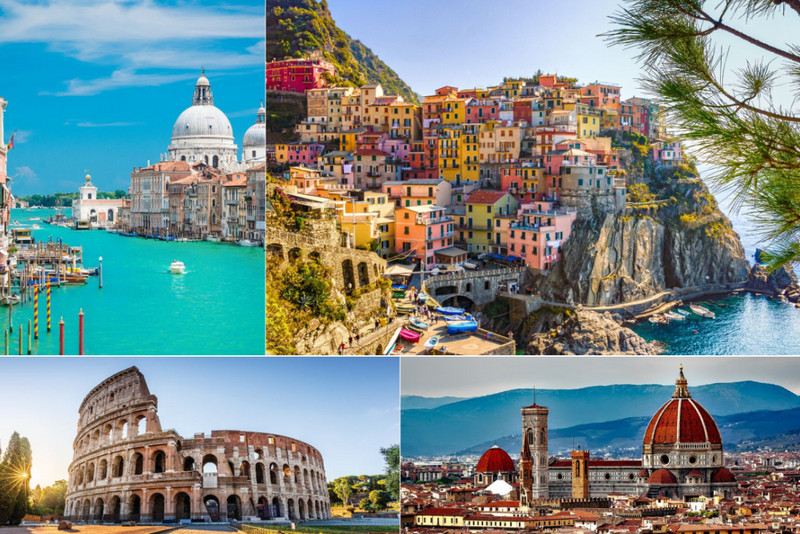
Your journey begins in Rome. The best way to think of the city is as the world’s largest open-air museum, where ancient history is your constant companion. With so many incredible things to see in Rome, the secret is to prioritize the absolute icons first. For a short visit, focus your energy on the core of the city’s power and beauty.
Rome’s Unmissable Trio
- The Colosseum & Roman Forum: Step into the world of Gladiator at the legendary amphitheater that once held 50,000 spectators. Afterwards, wander through the nearby Forum, the most famous ancient Roman ruins to visit, and the former downtown of an empire.
- Vatican City: Walk into the world’s smallest independent state—no passport needed!—to witness the grandeur of St. Peter’s Basilica and crane your neck to see Michelangelo’s breathtaking ceiling in the Sistine Chapel.
- The Trevi Fountain: Toss a coin into this stunning Baroque masterpiece to ensure your return to the Eternal City.
A crucial tip is to book your tickets in advance. In practice, lines for the Colosseum and Vatican Museums can be two to three hours long. By purchasing timed-entry tickets online from the official websites at least a month ahead, you can skip the queue and walk right in, saving an entire afternoon of your vacation.

Florence: How to Immerse Yourself in the Heart of the Renaissance
While Rome dazzles with ancient power, Florence is all about creative genius.
This is the city that gave birth to the Renaissance—a spectacular “rebirth” of art and culture that shaped the modern world. For first-time visitors debating between Rome or Florence, know that walking through Florence feels less like exploring an ancient empire and more like stepping into a living, breathing art history book. Every cobblestone street seems to lead to another masterpiece.
The heart of your Florence experience revolves around three iconic landmarks. You simply can’t miss the city’s magnificent Duomo, or cathedral, whose massive brick dome still dominates the skyline centuries after it was built. Just a short walk away is the Uffizi Gallery, a true treasure chest holding world-famous paintings like Botticelli’s The Birth of Venus. To complete the trio, take a romantic stroll across the Ponte Vecchio, the city’s famous medieval bridge lined with glittering jewelry shops that have been there for ages.
For an absolutely unforgettable view, nothing beats climbing to the top of the Florence Duomo’s dome. But a crucial tip is to book your ticket and a specific time slot online well in advance. You cannot simply show up and buy a ticket to climb, as entry is strictly timed. Planning ahead is the only way to guarantee you’ll get to experience this breathtaking panorama of the city and the Tuscan hills beyond.
Venice: Navigating the Magical City of Canals
Leaving the Renaissance treasures of Florence behind, prepare for a city unlike any other. Venice is a mesmerizing labyrinth where streets are made of water, and the sound of traffic is replaced by the gentle lapping of the canals. There are no cars here—zero. Instead, life floats by on vaporettos (water buses) and iconic gondolas. Getting lost in the maze of narrow alleyways and charming bridges is part of the fun, as every wrong turn reveals a picturesque courtyard or a hidden café.
Your Venetian adventure will inevitably lead you to St. Mark’s Square (Piazza San Marco), the city’s breathtaking main square. Often called the “drawing room of Europe,” it’s framed by stunning architecture, including the opulent St. Mark’s Basilica and the powerful Doge’s Palace, the historic home of Venice’s rulers.
This is the heart of the city and the perfect starting point for soaking in the grandeur that made Venice a dominant maritime power for centuries.
Of course, no trip is complete without a gondola ride, but a private tour can be expensive. For a fraction of the price, you can have a similar experience by using a traghetto. These are no-frills gondolas used by locals to cross the Grand Canal at points where there are no bridges. The ride only lasts a few minutes, and you’ll likely stand, but it gives you the classic on-the-water view and a fantastic photo opportunity for just a couple of euros, saving your budget for delicious pasta and gelato.
Amalfi Coast vs. Cinque Terre: Which Breathtaking Coastline Is Right for You?
Many travelers hear about Italy’s famous cliffside villages and wonder, “Amalfi Coast or Cinque Terre?” While both promise jaw-dropping sea views, they offer completely different experiences. The decision between Cinque Terre vs Amalfi Coast really comes down to your personal vacation style: are you seeking sun-drenched glamour and relaxation, or are you after rustic charm and active exploration? Knowing the difference is key to planning your perfect coastal escape.
The Amalfi Coast, a stunning shoreline south of Naples, is synonymous with Italian luxury. Imagine a winding coastal road connecting chic towns, grand villas, and some of the best beaches in Southern Italy. The world-famous town of Positano captures this spirit perfectly, with its cascade of pastel-colored houses tumbling down to a sophisticated beach scene. This is a destination best explored by bus, ferry, or private car, where the journey itself is part of the glamorous, leisurely experience.
In contrast, Cinque Terre offers a more rugged and down-to-earth adventure. Located in the north, not far from Tuscany, it’s not a single road but five distinct fishing villages connected by a local train and a famous network of hiking trails. The area is largely car-free, making it feel like a world away from the bustle of modern life—almost like exploring the Tuscan countryside, but perched on a cliff. So, if your dream involves a scenic drive and a stylish beach club, choose the Amalfi Coast. If you’d rather lace up your hiking boots to earn your ocean views, Cinque Terre is calling your name.
A Guide to Pompeii & Herculaneum: Visiting a City Frozen in Time
Just a short trip from Naples lies one of the most incredible ancient Roman ruins in the world: Pompeii. When nearby Mount Vesuvius erupted in 79 A.D., it didn’t bury the city in slow-moving lava. Instead, a massive cloud of volcanic ash fell instantly, preserving everything exactly as it was—from loaves of bread in ovens to intricate mosaics on villa floors. Walking through Pompeii’s sprawling stone streets feels like stepping through a portal into the daily life of the Roman Empire, offering a haunting and unforgettable snapshot of a world that vanished in a day.
While Pompeii captures all the headlines, its smaller neighbor, Herculaneum, is a hidden gem that many visitors find even more astonishing. Also buried by the same eruption, Herculaneum was engulfed by a different type of volcanic surge that carbonized organic materials. This means it is often better preserved; you can still see original wooden beams, two-story buildings, and even household furniture. As a much more compact, less crowded site, it offers a more intimate, detailed look at Roman life, making it a powerful complement to Pompeii’s grand scale.
Getting to these archaeological wonders is surprisingly straightforward and makes for an essential day trip. From Naples, the local train, the Circumvesuviana, runs directly to both sites. The train line loops around the base of Mount Vesuvius, with separate stops for “Pompei Scavi” (the ruins) and “Ercolano Scavi” (for Herculaneum). For a few euros, you can journey back 2,000 years to witness history firsthand.
What to See in Italy Travel Questions, Answered
Figuring out how to travel between Italian cities like Rome, Florence, and Venice is surprisingly easy, and it doesn’t involve a rental car. The absolute best way is by high-speed train. Companies like Trenitalia operate modern, comfortable trains (the fastest are called Frecciarossa, or “Red Arrow”) that connect major city centers in just a few hours. You can relax, watch the countryside roll by, and arrive right in the heart of your next destination without the stress of driving or parking.
So, what is the best month to visit Italy? While the summer months of July and August are popular, they are also incredibly hot and crowded. For a far more pleasant experience, aim for the “shoulder seasons”—spring (April to June) and autumn (September and October). During this sweet spot, the weather is typically mild and sunny, the biggest crowds have thinned out, and you’ll find a much more relaxed atmosphere for exploring.
One of the most critical Italy travel tips for beginners that can save you from a costly mistake involves regional trains (slower trains for shorter distances with no assigned seats). You must validate your paper ticket before you board. Just look for a small green or yellow stamping machine on the platform, insert your ticket until you hear it get stamped, and you’re good to go. Forgetting this step can result in a significant on-the-spot fine.
Key Travel Takeaways
- Use the fast, convenient high-speed trains to travel between major cities.
- Visit during the shoulder seasons (April-June or Sept-Oct) for the best weather and fewer crowds.
- Always validate your regional train tickets on the platform machines before boarding.
What to See in Italy: Your Next Steps to an Italian Adventure
That overwhelming feeling of planning a trip to Italy? You can leave it behind.
What was once a vague dream is now a focused map of the country’s most essential experiences, turning “someday” into a tangible plan. Take the first real step right now: open a new tab, pick just three places from this list that excite you most, and search the train time between them. Just like that, you are no longer dreaming—you are actively planning. Your adventure of what to see in Italy is ready to begin.