
Getting ready for your first time in Italy? It’s easy to feel overwhelmed by the endless options for trains, tickets, and tourist traps. Don’t worry. This guide takes the stress out of planning and gives you the exact steps for a perfect, confident adventure. We’ve focused on the most common questions to give you a clear, actionable starting point.
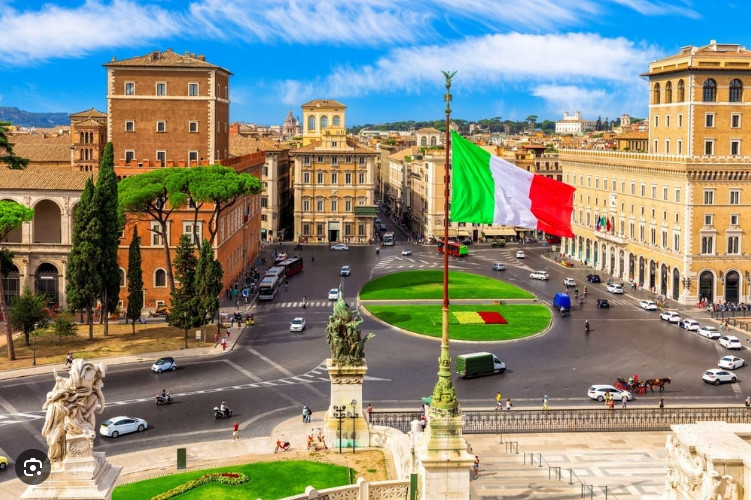
First Time in Italy: 10-Day Itinerary & Tips
For your first visit, the classic route of Rome, Florence, and Venice is popular for a reason—it’s the perfect introduction. Deciding between Rome, Florence, and Venice for first-timers is unnecessary when you can experience them all.
You’ll get a powerful dose of ancient history in Rome, immerse yourself in Renaissance art in Florence, and discover a city unlike any other in Venice.
The next big question is when to go. While summer is popular, travel experts agree that the best experiences are often found during the “shoulder seasons” of April-May and September-October. During these months, you’ll enjoy pleasant weather, see the sights with fewer crowds, and often find more reasonable prices for flights and hotels.
To put it all together, here is a proven Italy travel itinerary for 10 days that gives you a fantastic taste of the country without feeling rushed:
- Day 1: Arrive in Rome
- Days 2-3: Rome
- Day 4: Travel to Florence
- Days 5-6: Florence (with optional Tuscany day trip)
- Day 7: Travel to Venice
- Days 8-9: Venice
- Day 10: Depart from Venice
What You MUST Book in Advance (And How to Do It)
While it’s wonderful to leave room for spontaneous discovery in Italy, a few key attractions sell out weeks, if not months, in advance. If the Colosseum in Rome or the Vatican Museums are on your must-see list, booking tickets ahead of time isn’t just a good idea—it’s essential. Waiting until you arrive often means paying hugely inflated prices to third-party sellers for last-minute spots or, even worse, missing out completely. This is one of the most important things to know before going to Italy to avoid disappointment.

To get the best price and guarantee your ticket is valid, always try to book directly from the official websites. For the Colosseum (which includes the Roman Forum and Palatine Hill), the official seller is CoopCulture.
For the Vatican Museums and Sistine Chapel, use the official Vatican Museums website. You will see many other sites offering tickets, but these are often tour companies that bundle entry with a guided tour at a much higher price—a common way unsuspecting travelers end up overpaying for what they wanted: a simple entry ticket.
These high-demand tickets are typically released 1 to 3 months in advance, so it’s wise to check the official sites early in your planning and note the dates they become available. Once you have your key activities locked in for each city, you can start connecting the dots on your map. The next piece of the puzzle is booking your travel between cities, and in Italy, that almost always means taking the train.
How to Travel Between Cities: A Simple Guide to the Italian Train System
Connecting the dots of your itinerary is refreshingly simple, as the best way to travel between cities in Italy is by high-speed train. You have two main companies to choose from: Trenitalia (the national railway) and Italo (a private competitor). Think of them like competing airlines; both are modern, comfortable, and fast. Since prices vary, it’s always smart to check both of their websites for your specific travel dates to find the best deal. Booking a few weeks or more in advance can save you a significant amount of money compared to buying a ticket on the day of your trip.
For these main-line journeys, like Rome to Florence or Florence to Venice, the process is easy. You’ll book your ticket online and receive a confirmation with a seat reservation and a QR code. That’s it. There’s no need to print anything; you can simply show the conductor the code on your phone when they come around. This makes navigating the Italian train system for major routes incredibly straightforward and stress-free.
However, there is one crucial rule to remember if you ever take a slower, local train called a Regionale. These trains often don’t have assigned seats, and their tickets look like simple paper stubs. Before you get on the train, you must validate this paper ticket in one of the small stamping machines (usually green or yellow) located on the platform (binario). Forgetting this step can result in a hefty fine, as an unstamped ticket is considered unused.
At the station, large departure boards list upcoming trains by their final destination. Look for your train number and find its assigned platform, listed as binario.
Once you’ve done it once, you’ll see just how easy it is to get around. With your transportation sorted, you can focus on other important questions, like what you’ll be wearing while you sip that espresso in a sunny piazza.
What to Wear in Italy to Blend In (And Be Comfortable)
If you remember only one thing for your packing list, make it this: comfortable shoes are non-negotiable. While you might picture stylish locals on Vespas, the reality on the ground is miles of charming but uneven cobblestone streets. You will walk far more than you expect, and supportive, broken-in footwear is the single most important factor for enjoying your trip. Prioritize comfortable sneakers or flats over fashion; your feet will thank you after a long day exploring the Roman Forum.

Beyond footwear, the most important dress code to know is for entering Italy’s magnificent churches and cathedrals, including St. Peter’s Basilica. To show respect, you must have your shoulders and knees covered, a rule that is often strictly enforced at major sites. The easiest way to be prepared without sacrificing comfort is to carry a light scarf or cardigan in your bag. You can quickly wrap it around your shoulders before stepping inside, which is a simple solution many travelers and locals use.
This strategy is part of one of the best first-time in Italy tips: packing in layers. A light jacket for cool mornings, a t-shirt for a warm afternoon, and that scarf for church visits will have you ready for a full day of sightseeing. Being prepared allows you to move through your day smoothly and comfortably.
First time in Italy? What about Cash?
A Guide to Payments, Cards, and the ‘Coperto’
Sorting out your money in Italy is simpler than you might think. While credit cards are widely accepted for larger expenses like train tickets, hotels, and sit-down dinners, having some Euros on hand is essential for daily life. Cash is king for small, quick transactions that you’ll make constantly. A good rule of thumb is to carry €40- €50 for day-to-day spending.
When to Use Cash (Euros):
- Your morning coffee or pastry at a bar
- A scoop of gelato
- Shopping at local market stalls
- Paying the city tourist tax at your hotel check-in
When you sit down for a meal, you’ll notice a line item on your bill called the coperto. This isn’t a hidden fee or a scam; it’s a standard, per-person cover charge for the bread, olive oil, and table setting. Think of it like a small, fixed service fee. It’s a normal part of Italian dining etiquette for tourists to understand, and it means a large tip isn’t expected.
To get cash, always look for an ATM attached to a real bank, which will be labeled Bancomat. These offer the best exchange rates. Avoid the standalone, third-party ATMs found in tourist shops or on busy corners, as they often charge high “dynamic currency conversion” fees. Using a Bancomat ensures you get more Euros per dollar.
How to Eat Like a Local: Demystifying Italian Dining and Coffee Culture
The Italian approach to food and coffee has a certain rhythm, and once you learn the steps, you’ll feel right at home. One of the most common mistakes to avoid in Italy happens right at the coffee bar, where ordering isn’t always as simple as asking a barista for a cappuccino. In many bustling Italian cafés, the process is a well-oiled machine.
First, find the cash register, known as the cassa, and place your order there. After you pay, you’ll receive a receipt (scontrino).
You then take this receipt to the counter (banco), place it where the barista can see it, and confidently repeat your order. This two-step system keeps things moving quickly and is a key piece of Italian dining etiquette for tourists to master.
When you sit down for a full meal, the menu structure is different as well. You’ll see sections for the primo (first course) and secondo (second course). Don’t worry—this isn’t a mandate to eat a four-course meal every time. The primo is typically a pasta or risotto dish, while the secondo is a meat or fish entrée. It is perfectly normal for you to order just a primo or just a secondo as your entire meal.
Finally, let’s clear up the confusion around tipping. Because the coperto charge is already on your bill and service staff earn a full wage, tipping is not expected in the culture. If your server was fantastic, rounding up the bill by a few euros is a welcome gesture, but leaving nothing extra is completely fine. Knowing these simple rules will help you dine with confidence and avoid the kind of misunderstandings that can feel like tourist traps.
How to Avoid Common Tourist Traps and Scams on your first time in Italy
Beyond the dining etiquette, knowing where to eat is crucial for avoiding one of the most common mistakes in Italy: the overpriced tourist-trap restaurant. You can usually spot these a mile away. Be wary of restaurants with large, laminated menus featuring faded food photos or translations in five different languages. If an overly eager host is standing outside trying to lure you in, it’s best to walk on by. A good rule of thumb is to wander just one or two blocks away from any major monument; the quality of food often increases dramatically as the crowds thin out.
This awareness extends to the streets, especially in crowded hubs like Rome’s Spanish Steps or Milan’s Piazza del Duomo.
While Italy is generally a very safe country, petty scams do exist. The two most common are the “friendship bracelet” trick, where someone insists on tying a string on your wrist and then demands payment, and the “petition,” where a person with a clipboard distracts you while an accomplice may attempt to pick your pocket. In either case, the solution is the same: offer a firm, polite “No, grazie,” and keep walking without engaging.
Your best defense against these minor hassles is simple diligence with your belongings. Keep your wallet in a front pocket, not your back. For purses and day bags, a cross-body style worn in front of you with the zipper facing inward is an excellent choice, especially on crowded buses or metro trains. Taking these small, preventative steps allows you to relax and soak in the incredible atmosphere with confidence, ensuring your memories are of magnificent art and delicious pasta, not preventable mishaps.

First time in Italy:
Go with Confidence and Curiosity
That dream of gelato by the Colosseum is no longer just a picture on a postcard. Where there was once a puzzle of train schedules and unknown customs, you now hold a clear and confident plan. You’ve transformed the overwhelming questions of planning your first time in Italy into a map for an incredible adventure.
Your entire strategy comes down to a simple rhythm: plan the big bookings first, travel smart with a few cultural basics in mind, and always leave room to embrace the moment. This is the core of all good Italy travel advice, and it’s the foundation that allows you to relax and truly be present on your trip.
Because you’ve done the preparation, you are now free to get lost in a charming side street, savor an unexpected meal, and let the magic of Italy unfold around you. The logistics are handled. Go make those memories you’ve been dreaming of.