Planning a trip to Italy? The country has so many masterpieces that seeing its art can feel like drinking from a firehose.
With thousands of works competing for your attention, where do you even start? Many visitors leave galleries like Florence’s Uffizi feeling they have seen a lot but connected with little. Their memories become a blur of gold frames and old faces.
Must-See Paintings in Italy: Top 10 Artworks & Masterpieces
This guide is different. We’ve put together a tour of 10 must-see artworks. These pieces are chosen for their fame and the strong stories they tell.
They show rebellion, genius, or a moment that changed art forever. You will learn about the human stories and new ideas behind each piece. This will help you appreciate Italy more. You will leave with lasting memories.
1. The Last Supper: Witness the Most Dramatic Dinner Party in Art History
To see one of the world’s most recognizable paintings, you’ll head to the quiet dining hall of a convent in Milan. There, covering an entire wall, is Leonardo da Vinci’s monumental masterpiece, The Last Supper.
Leonardo chose to capture the split second after Jesus announces, “One of you will betray me.” The apostles are swept by a wave of shock, denial, and confusion.
Each figure shows a unique human reaction. Peter reacts with impulsive anger. Judas hides in the shadows, holding a small bag of silver.
Its incredible fragility makes seeing it a special experience.
Instead of using the traditional fresco technique of painting on wet plaster, Leonardo experimented on a dry surface. This allowed for stunning detail but also meant the masterpiece began to decay within his lifetime. Viewing is strictly limited to protect the delicate artwork, so booking tickets is essential.
2. The Birth of Venus: How a Pagan Goddess Redefined Renaissance Art
In Florence’s Uffizi Gallery, Sandro Botticelli’s The Birth of Venus feels like stepping into a dream. For centuries, large-scale paintings were almost exclusively reserved for biblical scenes. Here, Botticelli broke the mold, dedicating an enormous canvas to a pagan myth.
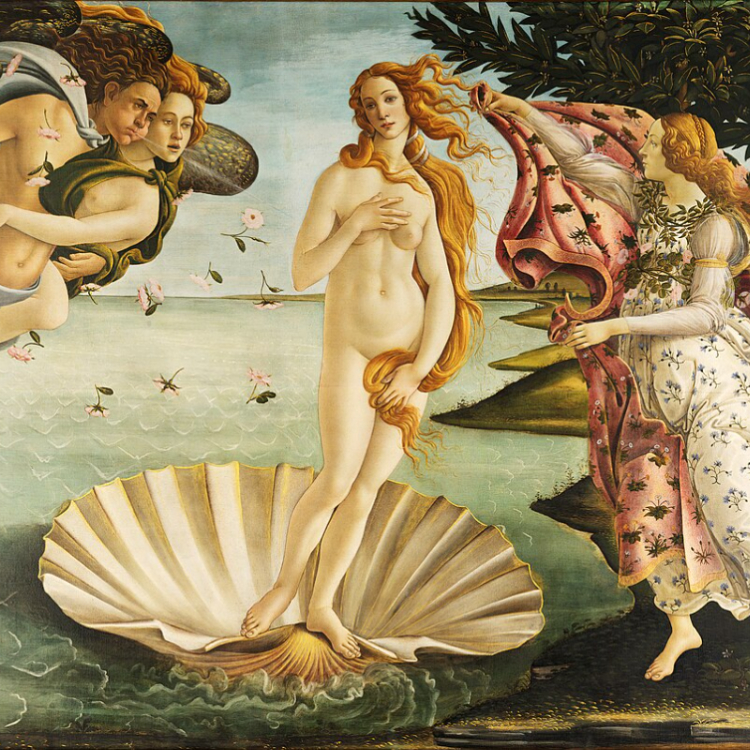
The painting captures the moment the goddess of love, Venus, arrives on a seashell, gently blown to shore by the wind god Zephyr. Her pose is modest and graceful, while a nymph rushes to cover her with a flower-adorned cloak. The scene is light and beautiful. It focuses on myth and the human form rather than on sin and salvation.
This was a groundbreaking moment. Botticelli gave an ancient Greek goddess the same focus usually given to the Virgin Mary. He showed that art can exist for beauty alone, inspired by classic stories. This painting helped open the floodgates for artists to explore a whole new world of subjects, changing the course of art forever.
3. The Sistine Chapel Ceiling: How to Actually ‘See’ Michelangelo’s Overwhelming Masterpiece
Our journey takes us to Vatican City for what might be the world’s most famous ceiling. Stepping into Michelangelo’s Sistine Chapel is breathtaking, but don’t try to absorb all 300 figures at once. Instead, let your eyes find the most famous panel right in the center: The Creation of Adam.
This single scene captures the story of creation in one electric moment. Look for the two outstretched hands—God’s, full of power, and Adam’s, still limp—separated by a mere inch. That small gap, full of excitement, shows the spark of life. It has become one of the most famous images in Western art.
The work is a fresco, meaning the pigment was painted directly onto wet plaster, chemically bonding it to the wall as it dried. This very difficult method is performed while lying on his back, 60 feet in the air.
This is why the bright colors have lasted for over 500 years. One crucial tip: photography is strictly forbidden, and silence is enforced. The flash from thousands of cameras would damage these delicate frescoes, so put your phone away and just be present.
4. The School of Athens: Find the Secret Portraits in Raphael’s Illusion of Deep Space
Just a short walk from the Sistine Chapel, you will find a fresco in the Raphael Rooms. This fresco is in the Vatican Museums. It feels like a world of its own. The School of Athens is Raphael’s tribute to the greatest thinkers of the past. It depicts a grand meeting of great minds in a single amazing scene.
The incredible illusion of depth is stunning. Raphael perfected linear perspective to make the flat wall seem like a massive, receding hall. Notice how the floor tiles seem to get smaller? All the lines in the building lead to the central figures, Plato and Aristotle. This strong effect makes you feel like you could join their debate.
Raphael also included a playful secret. He used his famous contemporaries as models for the ancient Greek philosophers. The wise man with a white beard is actually a portrait of Leonardo da Vinci. The gloomy figure sitting alone on the steps is Michelangelo.
5. David: Why This ‘Giant’ Sculpture Became the Symbol of Florence
Michelangelo’s David, a masterpiece waiting in Florence’s Galleria dell’Accademia, is a genius in its timing. Artists had always shown the hero David after slaying Goliath, but Michelangelo captures the tense moment before the fight. With a furrowed brow and intense gaze, this isn’t a victor; he’s a young man finding the courage to face a giant.
This image of a determined underdog resonated deeply with Florence. The small republic was constantly threatened by powerful rivals and saw itself as David. Originally placed outside the city hall, the statue became a political symbol and a warning to would-be invaders. It declared that even the small can be mighty.
To truly appreciate it, walk around the sculpture. The detail from every angle reveals the tension and confidence that Michelangelo carved from a single block of marble.
6. The Calling of St. Matthew: Experience the ‘Spotlight’ Effect That Changed Art Forever
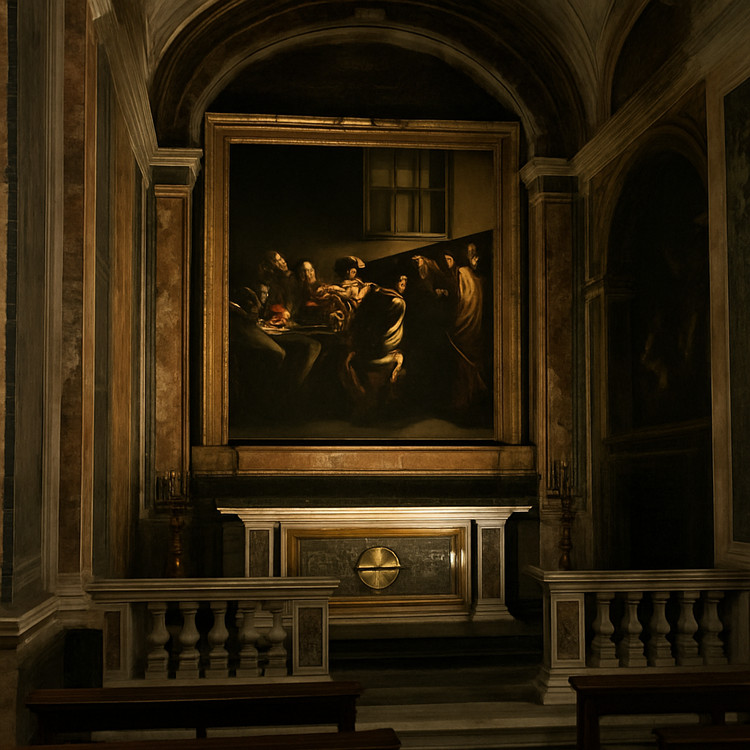
If Michelangelo’s David shows art reaching for divine perfection, Caravaggio’s paintings drag it right down to earth. Tucked away, not in a grand museum but in a Roman church, The Calling of St. Matthew is a scene of raw, cinematic power. It is an essential lesson in understanding Baroque painting.
The painting’s drama comes from chiaroscuro—a bold contrast between light and shadow. A sharp beam of light cuts across the dark, grimy room, following Christ’s pointing hand to illuminate the tax collector Matthew. Caravaggio uses light like a spotlight, freezing a single, tense moment for maximum emotional impact.
Its humanity makes the scene so powerful. Find Matthew at the table, pointing to his own chest with a bewildered expression that practically says, “Who, me?” He isn’t a glowing saint but a regular man, startled by a divine interruption to his workday. This made religious stories feel immediate and real. You can see this masterpiece for free in the Contarelli Chapel inside the San Luigi dei Francesi church in Rome.
7. Primavera: Uncover the Secret Garden of a Florentine Wedding
In Florence’s Uffizi Gallery, step into Botticelli’s other masterpiece, Primavera (Spring). This isn’t a direct story but an allegory—a visual poem where figures symbolize ideas. Scholars believe it was commissioned for a Medici wedding, making it a lush celebration of love and new beginnings.
To unlock its secret, read the painting from right to left. The story begins with the blue-faced wind god, Zephyr, pursuing a nymph. As he touches her, she transforms into the flower-scattering goddess Flora beside her. This mini-drama captures the forceful arrival of spring. Seeing this next to The Birth of Venus shows why Botticelli is essential. These works proved that great art could celebrate myth and beauty, not just religion.
8. Pietà: Feel the Heartbreak and Genius in Michelangelo’s First Masterpiece
In St. Peter’s Basilica, you’ll find a moment of profound, quiet grief. The Pietà shows the Virgin Mary holding Christ’s body. This scene was common, but no one created it like this before. Carved when he was just 24, Michelangelo showed Mary not as a sad, older woman. Instead, he portrayed her as a calm, very young figure accepting a great tragedy. This choice shocked early viewers but established his genius.
As you gaze at the flawless details, look for the sash running across Mary’s chest.
Legend says Michelangelo overheard pilgrims attributing his masterpiece to another artist. That night, in a fit of pride, he snuck in and carved “MICHELANGELO BUONARROTI, FLORENTINE, MADE THIS.” It was the first and only work he ever signed, a hidden mark of youthful confidence.
Today, the Pietà sits protected behind glass, its sorrowful grace as powerful as ever.
9. Assumption of the Virgin: See the Color and Drama of the Venetian School
If Michelangelo’s work is about the perfection of line and form, Venice is where color becomes the star. The Venetian School, led by masters such as Titian, believed that vibrant color was the truest way to express emotion. This revolutionary altarpiece in the Basilica di Santa Maria Gloriosa dei Frari is a masterclass in their philosophy.
The Assumption of the Virgin is a jolt of energy. Your eyes are immediately pulled into the drama by Titian’s masterful use of red. Notice how the color moves from the apostles’ robes at the bottom to the Virgin Mary’s gown. She is being lifted into the heavens. This creates a visual path that connects the earthly and the divine.
To experience its full power, stand at the back of the church.
Titian created this large work to be viewed from far away. This lets the colors and design come together with a stunning effect.
10. How to Actually Plan Your Art Tour and Skip the Lines
Armed with this list, your next step is logistics. Nothing dampens the magic of seeing a Botticelli quite like spending three hours in a queue. For Italy’s most popular museums, booking tickets online isn’t just a good idea—it’s essential.
Use this simple guide to prioritize:
- Book Months Ahead: Leonardo’s The Last Supper and Rome’s Borghese Gallery. The Borghese is especially strict, with timed two-hour slots, so tickets vanish instantly.
- Book Weeks Ahead: The Uffizi Gallery, Accademia Gallery (Florence), and the Vatican Museums. This lets you bypass the enormous general admission lines.
- Often Okay for Same-Day: Most smaller museums and many churches with notable art.
Beyond booking, the single most important rule is to avoid art fatigue. Resist the temptation to cram the Vatican Museums and the Borghese Gallery into the same afternoon. Limit yourself to one major art institution per day. This allows you time and mental space to really take in what you see. It changes a checklist into a real experience.
Your Art Adventure Awaits
What was once an overwhelming list is now a curated map to ten incredible stories. You are ready to enter a gallery and look beyond the frame.
You will see a moment of bold genius, a surprising new technique, or a human story shared over centuries. Planning your tour now begins with a single, exciting choice: pick the one masterpiece that captivated you most and start there.