If your dream of what to eat in Italy involves spaghetti and meatballs, you’re in for a delicious surprise. While Italian-American food is beloved, the dishes in Italy are a whole other world—often simpler, fresher, and deeply connected to a specific region.

What to Eat in Italy: Top 25 Italian Dishes
There is no single “Italian food,” but dozens of proud, distinct regional cuisines. The creamy, butter-based risottos of Milan share little with the sun-drenched, tomato-and-olive-oil pastas of Sicily. This guide is your passport to exploring that world, turning menu anxiety into a culinary adventure.
Why You Won’t Find the Same Dish in Rome and Venice: Understanding Regionality
The biggest surprise for many visitors is that Italy is home to 20 distinct regional cuisines. Before Italy was unified, food traditions developed in isolation, shaped by local agriculture. A dish isn’t just Italian; it’s Roman, Sicilian, or Tuscan.
This focus on hyper-local ingredients is your key to an amazing meal. A city’s geography dictates its menu: coastal Venice excels at seafood, while landlocked Florence is famous for its massive Bistecca alla Fiorentina. Seeking out Roman pastas like Cacio e Pepe or Carbonara when in Rome is almost always your best bet. Being skeptical of a Venetian restaurant pushing a classic Roman dish is smart.
How to Read an Italian Menu: Decoding the Primo, Secondo, and More
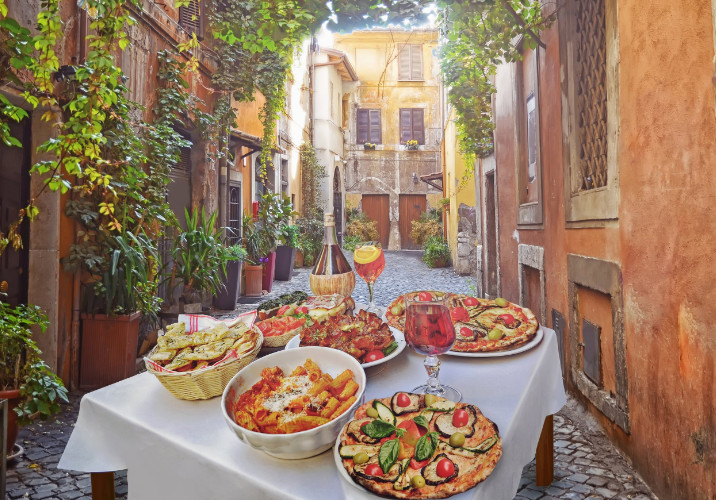
In an authentic trattoria, the menu isn’t split into just ‘appetizers’ and ‘mains.’ A typical Italian dinner is a series of smaller courses. Understanding this structure is the key to ordering with confidence. While menus vary, they generally follow this classic sequence:
- Antipasto: The starter. Platters of cured meats (salumi), cheeses (formaggi), and bruschetta.
- Primo: The “first course.” Almost always a carbohydrate: pasta, risotto, or soup.
- Secondo: The “second course.” The protein, like grilled fish, roasted chicken, or steak.
- Contorno: A side dish, like roasted potatoes or vegetables, ordered separately to accompany your secondo.
- Dolce: Dessert!
You do not have to order from every section. Most modern diners, including Italians, will choose just two or three. It’s perfectly normal to order an antipasto and a primo, or to skip the pasta and go straight for a secondo with a contorno.
1. Neapolitan Pizza: The Original and Best
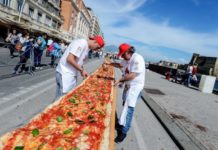
While you’ll find pizza across Italy, the true original hails from Naples. Authentic Pizza Napoletana is soft, thin, and gloriously “soupy” in the center, with a puffy, charred crust from a wood-fired oven. The most iconic version is the Pizza Margherita, topped with nothing more than San Marzano tomatoes, fresh mozzarella, and basil—said to represent the colors of the Italian flag.
To guarantee you’re getting the real deal, look for the D.O.P. (Denominazione di Origine Protetta) seal. This “Protected Designation of Origin” is a promise that the restaurant uses specific traditional ingredients and methods, much like how true Champagne can only come from its namesake region in France.

2-5. Rome’s Famous Four Pastas
When you sit down for a pasta primo in Rome, four legendary dishes dominate every menu. They are a masterclass in turning a few simple, high-quality items into something unforgettable. The secret lies in two core ingredients: guanciale (gwan-cha-lay), a cured pork cheek far richer than bacon, and Pecorino Romano, a hard, salty sheep’s milk cheese that packs a sharper punch than Parmesan.
Think of the four pastas as a family, each with a slightly different personality:
- Cacio e Pepe: The simplest of all. Just Pecorino cheese and black pepper, whipped with starchy pasta water into a surprisingly creamy sauce.
- Gricia: The “white Amatriciana.” It’s Cacio e Pepe with the addition of crispy, savory guanciale.
- Carbonara: The world-famous classic. This takes Gricia and adds egg yolk, creating a rich, silky sauce without a drop of cream.
- Amatriciana: The only one with tomato. It starts with a base of guanciale and chili, then adds a simple, bright tomato sauce.
A crucial tip: authentic Carbonara never contains cream. In Rome, the incredible creaminess comes from a perfect emulsion of egg yolk, Pecorino, and hot, starchy pasta water.
6-9. Must-Try Tuscan Specialties in Florence
As you travel into the rolling hills of Tuscany, the food shifts to a rustic, hearty character born from a “waste-not, want-not” tradition.
The undeniable king of any Florentine menu is Bistecca alla Fiorentina. This isn’t just any steak; it’s a massive, thick-cut T-bone from a special breed of local cattle, seasoned simply and grilled over charcoal. It’s always served very rare, priced by weight, and best shared between two or more people. Don’t ask for it well-done!
This same spirit extends to two classic Tuscan soups. Ribollita is a thick, comforting vegetable and bean soup made hearty with stale bread. A close cousin is Pappa al Pomodoro, a simpler but delicious soup of fresh tomatoes, basil, and bread.
For a true Florentine street food experience, look for a food cart selling Lampredotto. This is one for the adventurous eater: a sandwich filled with tender, slow-cooked tripe served in a bun that’s often dipped in the cooking broth.

10-14. A Taste of the North: From Bologna’s Ragù to Venetian Seafood
Northern Italy welcomes you with a richer, more decadent style of cooking where butter and cream often replace olive oil.
In Bologna, you’ll find the true Ragù alla Bolognese. It’s a slow-simmered, meat-heavy sauce with just a touch of tomato and milk for tenderness, traditionally served with fresh egg Tagliatelle whose flat ribbons catch the hearty sauce.
Another northern star is Risotto, a magnificent first course where starchy rice is patiently stirred with broth until unbelievably creamy. You’ll find it prepared in countless ways, from the golden, saffron-infused Risotto alla Milanese to versions with wild mushrooms.
Equally beloved is Polenta, a humble dish of slow-cooked cornmeal that can be served soft like mashed potatoes or cooled, cut, and grilled. It often acts as a warm bed for savory meat stews, mushrooms, or cheese.
In Venice, the cuisine turns toward the sea. For a visually stunning meal, try Spaghetti al Nero di Seppia. The pasta is tossed in squid ink, which gives it a dramatic black color and a surprisingly mild, briny flavor.
15-18. The Best of Southern Italy & the Islands
Heading south, the cuisine becomes brighter and bolder, fueled by sun-ripened tomatoes, fresh basil, and abundant seafood. Sicily’s Arancini are golden-fried rice balls stuffed with a savory meat sauce (ragù) and cheese. In Rome, you’ll find a similar snack called Supplì, smaller and famous for the string of melted mozzarella you find when you break one open, giving them the nickname “telephones.”
Southern pasta dishes highlight incredible local produce. Pasta alla Norma, a Sicilian classic, combines fried eggplant with a rich tomato sauce, topped with salted ricotta. In the “heel” of Italy’s boot, you’ll find Orecchiette (“little ear” pasta), traditionally served with a simple sauce of broccoli rabe and garlic.
To taste the best of the coast, look for Fritto Misto. This is a glorious, lightly fried mix of whatever fresh shrimp, calamari, and small fish were caught that day, often served in a simple paper cone.
19-21. Beyond Pasta: Essential Meats and Cheeses
An antipasto board of cured meats often stars Prosciutto, a silky, salt-cured ham. You’ll likely encounter two famous rivals: Prosciutto di Parma is bold and savory, while Prosciutto di San Daniele is known for being slightly sweeter. That same platter will likely feature Parmigiano Reggiano. In Italy, it’s a delicacy eaten on its own in nutty, crumbly chunks.
For a fresh cheese experience, you must try Mozzarella di Bufala. Made from the richer milk of Italian water buffaloes, it’s an incredibly soft, luscious cheese that’s milky and full of flavor. Once you’ve had it fresh, you’ll understand why it’s famous worldwide.
22-23. The Sweet Finale: Desserts in Italy
When it comes to dolce, two classics reign supreme. You’ll find Tiramisù almost everywhere—a rich dessert of coffee-soaked ladyfingers and creamy mascarpone cheese. For something simpler, look for Panna Cotta, a silky “cooked cream” pudding served chilled with a berry or caramel sauce.
No trip is complete without Gelato Artigianale (artisan gelato). The difference between gelato and ice cream lies in the churning process; gelato is churned more slowly, incorporating less air. This makes it denser, smoother, and more intensely flavored. To find the best shops, avoid places with brightly colored mounds piled high. Authentic gelato has natural, muted colors (pistachio should be brownish-green, not neon), and the best spots often keep it in covered metal containers.

24. Aperitivo Explained: Italy’s Happy Hour Ritual
Long before dinner, Italian cities come alive with aperitivo. Think of it as Italy’s version of happy hour, designed to whet your appetite. Typically, between 6 and 8 PM, you buy a drink, and it comes with a complimentary snack. Remember, it’s a prelude to dinner, not a replacement for it.
You’ll see glasses of the vibrant, orange Aperol Spritz on nearly every outdoor table. This classic cocktail, made with prosecco, Aperol, and a splash of soda, is bubbly, a little bitter, and incredibly refreshing. Participating in an aperitivo is one of the best ways to feel the rhythm of daily life in Italy.
25. How to Order Coffee in Italy (and Avoid Surprises)
If you ask for a “caffè” in an Italian bar, you’ll be handed a small, powerful shot of espresso—the default coffee in Italy. It’s a quick pick-me-up locals enjoy, served at the counter.
One unwritten rule involves milky coffee. Drinks like cappuccinos or caffè lattes are considered breakfast fare. Ordering a cappuccino after dinner is a classic tourist move, as Italians believe the milk can hinder digestion.
Finally, to avoid a common mix-up: if you want a hot, milky coffee, you must order a caffè latte. The word “latte” on its own simply means “milk.”
What to Eat in Italy:
3 Rules to Avoid Tourist Traps
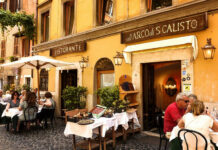
Finding a memorable meal is simple once you know the signs of a tourist trap. First, check the menu. Is it a glossy, laminated book with photos and five languages? That’s a major red flag. Great local restaurants often have simple, one-page paper menus written primarily in Italian, focused on seasonal ingredients.
Next, use the “one-block rule.” Restaurants right next to a famous landmark often rely on location rather than quality. Simply walk one or two streets away from the main square. You’ll quickly find quieter spots filled with the sound of Italian chatter—a sure sign you’ve found where locals eat. These simple checks are your key to discovering authentic food.
Your Delicious Adventure Awaits
You’ve moved beyond the familiar to discover a rich landscape of traditional Italian food, where every region has its own proud specialty. You now have the tools to decipher local menus, understand the rhythm of a meal, and order with confidence.
The real magic of eating in Italy is seeing food as simple, local, and full of history. Your adventure begins with a single choice: try the dish you’ve never heard of. Be curious, eat where the locals eat, and as they say in Italy, buon appetito!